Genetically Immortalized Cells: Unlocking the Potential for Scalable Cultured Meat Production

[fusion_builder_container type=”flex” hundred_percent=”no” equal_height_columns=”no” hide_on_mobile=”small-visibility,medium-visibility,large-visibility” background_position=”center center” background_repeat=”no-repeat” fade=”no” background_parallax=”none” parallax_speed=”0.3″ video_aspect_ratio=”16:9″ video_loop=”yes” video_mute=”yes” border_style=”solid”][fusion_builder_row][fusion_builder_column type=”1_1″ layout=”1_1″ background_position=”left top” border_style=”solid” border_position=”all” spacing=”yes” background_repeat=”no-repeat” margin_top=”0px” margin_bottom=”0px” animation_speed=”0.3″ animation_direction=”left” hide_on_mobile=”small-visibility,medium-visibility,large-visibility” center_content=”no” last=”true” hover_type=”none” first=”true” min_height=”” link=”” background_blend_mode=”overlay”][fusion_text columns=”” column_min_width=”” column_spacing=”” rule_style=”default” rule_size=”” rule_color=”” hue=”” saturation=”” lightness=”” alpha=”” content_alignment_medium=”” content_alignment_small=”” content_alignment=”” hide_on_mobile=”small-visibility,medium-visibility,large-visibility” sticky_display=”normal,sticky” class=”” id=”” margin_top=”” margin_right=”” margin_bottom=”” margin_left=”” fusion_font_family_text_font=”” fusion_font_variant_text_font=”” font_size=”” line_height=”” letter_spacing=”” text_transform=”none” text_color=”” animation_type=”” animation_direction=”left” animation_speed=”0.3″ animation_offset=””]

Genetically Immortalized Cells: Unlocking the Potential for Scalable Cultured Meat Production
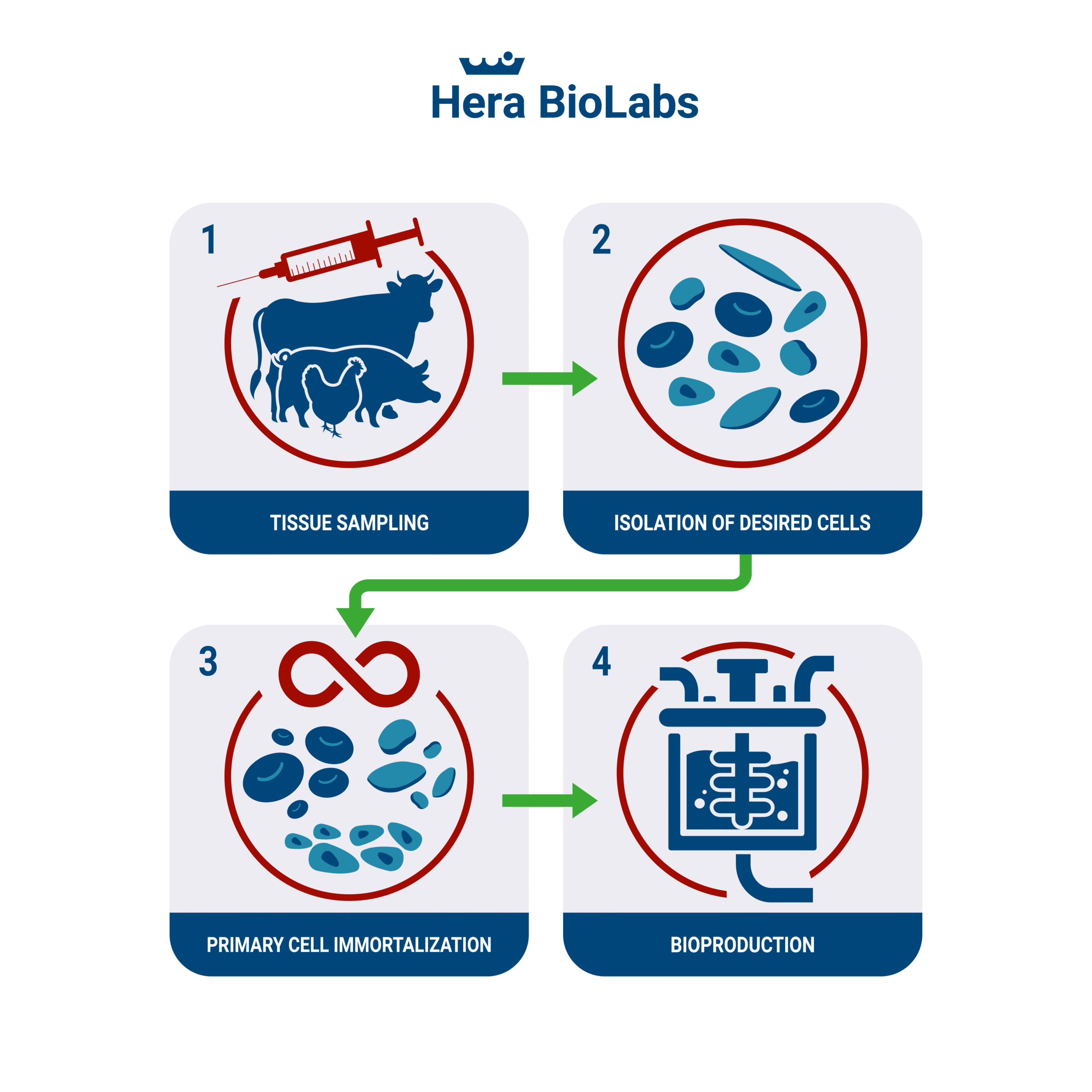
Artificial or cultured meat has been a topic of intense interest for the food industry, with the potential to offer a sustainable and ethically sound alternative to traditional animal farming. Now, a new advancement in this sector is setting the stage for potential scalability: the immortalization of cells for meat production. A recent paper titled “Immortalized Bovine Satellite Cells for Cultured Meat Applications” offers some important insights into how this technology could transform the way we produce meat.

immortalized cells for cultured meat applications

Cultured Meat and Immortalization: A Case Study

Cultured meat, also known as lab-grown meat, is developed by culturing animal cells in a controlled environment. Despite the promise of this technology, one of the major challenges is obtaining a consistent, large-scale source of animal cells that can grow indefinitely, overcoming the Hayflick limit – the natural limit to cellular division. To address this challenge, the paper proposes the idea of genetically immortalized cells. By introducing specific genes that extend a cell’s lifespan, a theoretically infinite supply of cells could be produced. This concept offers significant potential benefits, including rapid growth, bypassing cellular senescence (aging), and a consistent starting cell population for production.

In the study, researchers developed genetically immortalized bovine satellite cells (iBSCs) via constitutive expression of two key components: bovine Telomerase reverse transcriptase (TERT) and Cyclin-dependent kinase 4 (CDK4). Telomerase, an enzyme that lengthens telomeres—the protective ends of chromosomes—allows the cells to divide without experiencing age-related decline. Meanwhile, CDK4, a protein kinase, is crucial for cell cycle progression.

The result was impressive: the iBSCs achieved over 120 doublings at the time of publication and maintained their capacity for myogenic differentiation—meaning they could still differentiate into muscle cells, essential for creating the meat texture. The study’s results thus demonstrate the immense potential of immortalized cells for cultured meat production.

Implications for the Field

The creation of genetically immortalized bovine satellite cells presents an invaluable tool for cultured meat research and development. By providing a reliable and rapidly growing cell population, the technology could enable the mass production of cultured meat, addressing the critical scalability challenge. As biotech companies continue to innovate, the integration of immortalized cells into cultured meat production may not be far from realization. As we continue to refine our methods and improve our understanding of cell biology and genetic engineering, the dream of sustainable, ethical, and scalable meat production comes closer to reality.

PiggyBac for Immortalization

The piggyBac transposon technology is a highly effective approach for cell immortalization, particularly valued for its, efficiency and stability. As a non-viral technology, it also bears significant implications for regulatory approval, offering potential advantages in navigating complex processes like FDA approval.

Here are some key reasons for choosing piggyBac transposon technology in the process of immortalizing cells:

  1. Non-Viral Delivery System: PiggyBac transposon is a non-viral method of DNA insertion, which presents a notable advantage when considering regulatory aspects. Viral gene delivery methods can sometimes raise safety concerns due to their potential for mutagenesis and immunogenicity. On the contrary, piggyBac, as a non-viral technology, is less likely to trigger these concerns, which can streamline the process of securing regulatory approval, such as from the FDA.
  2. High Carrying Capacity: PiggyBac transposons can carry large genetic elements, enabling the insertion of multiple genes or extensive genetic components. This is crucial when multiple genes are required for cell immortalization. The piggyBac cargo capacity extends beyond 25 kb in size.
  3. Stable Gene Expression: Genes introduced using piggyBac transposition maintain stable expression in the cell. This stability is vital for cell immortalization, where continuous expression of specific genes is necessary.

The piggyBac transposon technology offers an easy non-viral solution for gene transfer and cell immortalization. Contact Hera if you are interested in using piggyBac for cell line engineering or immortalization products.

[/fusion_text][/fusion_builder_column][/fusion_builder_row][/fusion_builder_container]

Advantages of Utilizing the SRG rat for Investigating Tumor Metastasis

[fusion_builder_container type=”flex” hundred_percent=”no” equal_height_columns=”no” hide_on_mobile=”small-visibility,medium-visibility,large-visibility” background_position=”center center” background_repeat=”no-repeat” fade=”no” background_parallax=”none” parallax_speed=”0.3″ video_aspect_ratio=”16:9″ video_loop=”yes” video_mute=”yes” border_style=”solid”][fusion_builder_row][fusion_builder_column type=”1_1″ layout=”1_1″ background_position=”left top” border_style=”solid” border_position=”all” spacing=”yes” background_repeat=”no-repeat” margin_top=”0px” margin_bottom=”0px” animation_speed=”0.3″ animation_direction=”left” hide_on_mobile=”small-visibility,medium-visibility,large-visibility” center_content=”no” last=”true” hover_type=”none” border_sizes_top=”” border_sizes_bottom=”” border_sizes_left=”” border_sizes_right=”” min_height=”” link=”” background_blend_mode=”overlay” first=”true”][fusion_text columns=”” column_min_width=”” column_spacing=”” rule_style=”” rule_size=”” rule_color=”” hue=”” saturation=”” lightness=”” alpha=”” user_select=”” awb-switch-editor-focus=”” content_alignment_medium=”” content_alignment_small=”” content_alignment=”” hide_on_mobile=”small-visibility,medium-visibility,large-visibility” sticky_display=”normal,sticky” class=”” id=”” width_medium=”” width_small=”” width=”” min_width_medium=”” min_width_small=”” min_width=”” max_width_medium=”” max_width_small=”” max_width=”” margin_top=”” margin_right=”” margin_bottom=”” margin_left=”” fusion_font_family_text_font=”” fusion_font_variant_text_font=”” font_size=”” line_height=”” letter_spacing=”” text_transform=”none” text_color=”” animation_type=”” animation_direction=”left” animation_color=”” animation_speed=”0.3″ animation_delay=”0″ animation_offset=”” logics=””]

The dissemination of tumor cells into systemic circulation is a critical area of cancer research, but it presents significant challenges. One obstacle is the lack of appropriate animal models that can support larger tumors and enable frequent, large volume blood collection. In this article, we explore the innovative research conducted by Ami Yamamoto and colleagues in Kevin Cheung’s lab at Fred Hutchinson Cancer Center.

Challenges with in vivo modeling of breast cancer dissemination

Aggressive cancers frequently exhibit necrotic tumor interiors, which is associated with poor clinical prognosis and the development of metastasis. [2-6] Despite this association, the precise mechanisms by which the necrotic core promotes metastasis are not fully understood. In this study, the research team employed SRG rats as a model organism to improve the detection of dissemination events and study molecular mechanisms that mediate the relationship between tumor necrosis and metastasis. [1]

Supplemental Figure S1: Orthotopic transplantation into rats produce 3x larger tumors, 10x more CTCs, and 4x more lung metastases than into mice.

Breakdown of Figure S1:

  • S1A) Experimental schema. 4T1 mouse mammary tumor cells labeled with membrane GFP (4T1-GFP) were orthotopically transplanted into a single #4 mammary fat pad of SRG rats (n=6) or NSG mice (n=24). Animals were sacrificed at 24 days post-transplantation.
  • S1B-C) Final tumor weight and estimated final tumor volume per animal.
  • S1D) Blood volume collected per animal.
  • S1E) Representative micrographs of single CTCs and CTCs clusters from 4T1-GFP transplanted SRG rats. GFP denoted in green. DAPI in blue.
  • S1F-G) Single CTC and CTC cluster abundance per animal. Individual blood samples from 8 mice were pooled into one tube for a total of n=3 samples. Events per individual animal are reported.
  • S1H) Percentage of CTC events that were single CTCs or CTC clusters. Mean ± SD.
  • S1I) Representative stereomicroscope images of lung metastases from NSG mice and SRG rats.
  • S1J) The number of lung metastases determined by stereomicroscopy in transplanted SRG rats and NSG mice.
  • Mean values shown on graphs. All P-values determined by Welch’s t-test.

Yamamoto et al. began by comparing tumor growth and metastasis in SRG rats versus NSG mice. They implanted the same volume of luciferase-tagged 4T1 mouse mammary carcinoma cells (4T1-Luc) into the mammary tissue of SRG rats or NSG mice. After 24 days of growth, as tumors approached the maximum allowable size for mice, tumors were removed and characterized. Rat tumor mass and volume was three-fold higher than mouse (Figure 1A-C). Additionally, the team was able to collect ten-fold more blood from rats versus mice, leading to a proportional ten-fold increase in the recovery of both single circulating tumor cells (CTCs) and CTC clusters (Figure 1D, F, & G). The ratio of CTC clusters to single CTCs did not differ between rats and mice, nor did their morphological appearance (Figure 1E & H). In keeping with higher numbers of CTCs, rats exhibited more lung metastases than mice, assessed using stereomicroscopy for GFP (Figure 1I & J). The authors concluded that, because the same number of 4T1 cells was transplanted in both SRG rats and NSG mice and because tumors were harvested at the same time, our direct comparison showed that the rat transplantation model increases the efficiency of detecting rare tumor dissemination events by 10-fold.

Having established the utility of the SRG rat, the authors proceeded to show that the development of necrosis is temporally related to dissemination of CTCs, in both rats and humans. Importantly, they report that dissemination occurs in the dilated blood vessels surrounding the necrotic tumor core, and that dissemination events are dependent on ANGPTL7 that is produced by tumor cells bordering the necrotic region. The authors suggest that ANGPTL7 could be a viable pharmacological target for the inhibition of metastatic events.

Benefits of the SRG rat model in CTC research

These findings make the SRG rat a promising model for studying CTC dissemination, and these results provide valuable insights into the molecular mechanisms underlying tumor dissemination and pave the way for the development of new therapies for breast cancer.

Figure 4: The SRG Rat lacks B, T, and NK cells.

Learn more about Hera’s SRG Rat Model

The SRG rat model has emerged as a promising tool for studying circulating tumor cells and metastasis, providing several advantages over traditional mouse models. Hera offers in vivo oncology studies utilizing the SRG rat in a wide variety of xenograft and PDX tumor models, allowing researchers to gain valuable insights into the molecular mechanisms underlying tumor dissemination.

Contact Charles River Labs for more information.

References:
  1. Yamamoto A, Huang Y, Krajina BA, et al. Metastasis from the tumor interior and necrotic core formation are regulated by breast cancer-derived angiopoietin-like 7. Proc Natl Acad Sci U S A. 2023;120(10):e2214888120. doi:10.1073/pnas.2214888120  
  2. Fisher, E. R., Sass, R., & Fisher, B. (1984). Pathologic findings from the National Surgical Adjuvant Project for Breast Cancers (protocol no. 4). X. Discriminants for tenth year treatment failure. Cancer, 53(3 Suppl), 712–723. https://doi.org/10.1002/1097-0142(19840201)53:3+<712::aid-cncr2820531320>3.0.co;2-i  
  3. Jimenez, R. E., Wallis, T., & Visscher, D. W. (2001). Centrally necrotizing carcinomas of the breast: a distinct histologic subtype with aggressive clinical behavior. The American journal of surgical pathology, 25(3), 331–337. https://doi.org/10.1097/00000478-200103000-00007 
  4. Leek, R. D., Landers, R. J., Harris, A. L., & Lewis, C. E. (1999). Necrosis correlates with high vascular density and focal macrophage infiltration in invasive carcinoma of the breast. British journal of cancer, 79(5-6), 991–995. https://doi.org/10.1038/sj.bjc.6690158 
  5. Bredholt, G., Mannelqvist, M., Stefansson, I. M., Birkeland, E., Bø, T. H., Øyan, A. M., Trovik, J., Kalland, K. H., Jonassen, I., Salvesen, H. B., Wik, E., & Akslen, L. A. (2015). Tumor necrosis is an important hallmark of aggressive endometrial cancer and associates with hypoxia, angiogenesis and inflammation responses. Oncotarget, 6(37), 39676–39691. https://doi.org/10.18632/oncotarget.5344
  6. Zhang, L., Zha, Z., Qu, W., Zhao, H., Yuan, J., Feng, Y., & Wu, B. (2018). Tumor necrosis as a prognostic variable for the clinical outcome in patients with renal cell carcinoma: a systematic review and meta-analysis. BMC cancer, 18(1), 870. https://doi.org/10.1186/s12885-018-4773-z

[/fusion_text][/fusion_builder_column][/fusion_builder_row][/fusion_builder_container]

piggyBac Case Study: Generating Full-length NKR-P1 Transfectants

The high efficiency and stability of piggyBac integration have been proven in a variety of recent studies. With a large cargo capacity of over 200kb, piggyBac surpasses many other delivery technologies, making it the optimal choice for stable cell line creation. Hundreds of peer-reviewed papers have been published as a result of the piggyBac platform.

In one published study, full-length NKR-P1 transfectants were generated using the piggyBac system. Let’s take a closer look at the critical role that piggyBac played in helping the research team build a comprehensive model of NKR-P1-LLT1 interactions to better understand how they function in immune-related diseases and cancer.

Human NKR-P1:LLT1 complex reveals clustering in the immune synapse

Innate immune lymphocytes known as natural killer (NK) cells have a variety of activating and inhibiting surface receptors, allowing them to recognize and kill malignant and infected cells. One of these is NKR-P1, which acts as an inhibitory receptor. Additionally, NK cells support the body’s adaptive immune response and even preserve a type of immunological memory, further highlighting the vital functions of these cells in immunity.

LLT1, a ligand of NKR-P1, is usually expressed on monocytes and B cells and helps maintain NK cell self-tolerance. However, it is also upregulated in many cancers, allowing those cancer cells to evade the immune system by binding to NKR-P1, which inhibits the NK cells.

Figure 1: Depiction of the hypothetical arrangement of NKR-P1 dimers (cyan and blue) interacting with LLT1 dimers (green and yellow). Bláha et al., 2022.

LLT1 ligation induces NKR-P1 receptor clustering

In this study, full-length NKR-P1 transfectants were generated using the piggyBac system, and induced to express the receptor in a limited density to allow single-molecule localization microscopy. Unlike other gene editing platforms, piggyBac allows you to integrate large or small transgenes seamlessly. Demonstrated to work efficiently beyond 250kb+ in size, Hera regularly creates vectors between 10kb and 25 kb including multi-component ion channels and GPCRs in a single construct.

Super-resolution dSTORM microscopy shines with piggyBac

For the single-molecule localization microscopy, full-length NKR-P1 stable transfectants were generated in HEK293S GnTI– cell line using the piggyBac transposon-based system with doxycycline-inducible protein expression. It’s important to note that long-term stability is essential for producing consistent and reproducible results like this, and the piggyBac transposon genomic integrations are extremely stable for months of continuous culture and >50 passages.

Figure 2: piggyBac’s high carrying capacity allowed for the creation of full-length NKR-P1 stable transfectants in the HEK293S GnTI– cell line.

Successful Results using piggyBac Technology

The research team’s findings clarify the mode of signal transduction of the human NKR-P1 receptor within the NK cell immune synapse and how this receptor overcomes its low affinity for LLT1 by ligand binding-induced cross-linking and clustering, serving as a useful model for the future description of related homologous low-affinity complexes. By observing the clusters using SEC-SAXS analysis, dSTORM super-resolution microscopy, and freshly isolated NK cells, with the help of piggyBac technology, the team concluded that only the ligation of both LLT1 binding interfaces leads to effective NKR-P1 inhibitory signaling.

piggyBac Patented Technology for your Industry

The piggyBac Transposase/Transposon DNA Delivery System is a non-viral gene editing platform designed for stable integration and expression across a variety of industries and research. Hera BioLabs is the exclusive licensee and sublicensor of this patented technology for drug discovery and early development research including creating custom cell lines for R&D, therapeutic bioprocessing, animal model embryo engineering, and more.

Reach out to us to learn more about the piggyBac technology, the services we offer, and available licenses for your industry.

References

Bláha, J., Skálová, T., Kalousková, B. et al. Structure of the human NK cell NKR-P1:LLT1 receptor:ligand complex reveals clustering in the immune synapse. Nat Commun 13, 5022 (2022). https://doi.org/10.1038/s41467-022-32577-6

Evolution Of The Rat Model

Rats have been favored for drug development studies because the metabolism and pharmacokinetic properties of drugs in rats are most similar to humans. Rats are also preferable for xenograft studies because they allow for tumor volumes 10-fold higher than in mice, they are easier to surgically manipulate, and they can accommodate multiple blood samplings to assess the pharmacokinetic properties of a drug. To successfully generate cancer xenografts from humans in rats, the animal must be immunodeficient to prevent rejection of the xenograft by the animal’s immune system.

The first generation of immunodeficient rats is the nude rat. Nude rats are characterized as being devoid of T-cells, but still retaining functional B- and NK-cells. The nude rat accepts human xenografts, but studies have shown that nude rats have increased incidences of tumor regression likely related to age-dependent changes in immunocompetence 1-2.

The answer to some of these deficiencies was the development of severe combined immunodeficiency (SCID) rats. SCID rats are Prkdc deficient which means the rat has no B- or T-cells. SCID rats demonstrate severe immunodeficiencies without the “leaky” phenotype that is observed in SCID mice – where detectable levels of Ig are generated by a few clones of functional B-cells3. SCID rats also demonstrate growth retardation and exhibit premature senescence. SCID rats host xenografts successfully, but only survive for around a year if kept under very strict pathogen-free conditions.

In order to overcome the limitations of the SCID rat, Hera Biolabs developed the Sprague-Dawley Rag2 null (SDR) rat. SDR rats are generated on a Sprague-Dawley background – an albino, outbred lab rat that is preferred for metabolism and toxicity studies. Sprague-Dawley rats are also preferred for their calm demeanor, ease of handling, and larger size than Wistar rats. The SDR rat is null for the Rag2 gene which results in a lack of B-cells and a severely reduced T-cell population4. These rats are highly permissible to xenografts and xenografts demonstrate greater uniformity in growth profiles. SDR rats have also been shown to successfully host large, rapidly developing xenografts of human cancer cell lines (e.g. H358, VCaP) that are difficult or impossible to generate in NSG mouse models. The SDR rat maintains a population of NK-cells which makes this model unlikely to accept xenografts of all tumor types.

The researchers at Hera Biolabs noted that a limitation of the SDR model is the large population of NK-cells that is maintained. To overcome this limitation, an evolution on the SDR rat has been developed at Hera biolabs that contains an additional Il2gamma null, known as the OncoRat®-SRG™. The OncoRat is completely depleted of B-cells, T-cells, and NK-cells. The OncoRat boasts an engraftment take rate of 90%+ using non-small cell lung cancer (NSCLC) patient derived xenograft model establishment as the example.

Hera - Blog - Evolution of the rat model - Figure 1

References

  1. Colston, M. J.; Fieldsteel, A. H.; Dawson, P. J., Growth and regression of human tumor cell lines in congenitally athymic (rnu/rnu) rats. Journal of the National Cancer Institute 1981, 66 (5), 843-8.
  2. Maruo, K.; Ueyama, Y.; Kuwahara, Y.; Hioki, K.; Saito, M.; Nomura, T.; Tamaoki, N., Human tumour xenografts in athymic rats and their age dependence. British Journal of Cancer 1982, 45 (5), 786-789.
  3. Mashimo, T.; Takizawa, A.; Kobayashi, J.; Kunihiro, Y.; Yoshimi, K.; Ishida, S.; Tanabe, K.; Yanagi, A.; Tachibana, A.; Hirose, J.; Yomoda, J.-i.; Morimoto, S.; Kuramoto, T.; Voigt, B.; Watanabe, T.; Hiai, H.; Tateno, C.; Komatsu, K.; Serikawa, T., Generation and Characterization of Severe Combined Immunodeficiency Rats. Cell Reports 2012, 2 (3), 685-694.
  4. Noto, F. K.; Adjan Steffey, V.; Tong, M.; Ravichandran, K.; Zhang, W.; Arey, A.; McClain, C. B.; Ostertag, E.; Mazhar, S.; Sangodkar, J.; Difeo, A.; Crawford, J.; Narla, G.; Jamling, T. Y., Sprague Dawley Rag2 null rats created from engineered spermatogonial stem cells are immunodeficient and permissive to human xenografts. Mol Cancer Ther 2018.

Rapid Creation of Bioluminescent Cell Lines for Orthotopic and Metastatic Rodent Oncology Studies

The piggyBac (PB) transposon system delivers highly stable transgenes without gene silencing for over 40 passages, making PB superior to viral methods for creating reporter cell lines. The PB transposon is a mobile genetic element that is integrated into the host genome via the PB transposase “cut and paste” mechanism. To achieve stable genomic integration, The PB transposon is co-transfected with a PB transposase protein or expression vector. The transposase inserts the gene cargo and ITRs into the host genome at TTAA sites (Figure 1).

how-piggybac-works

Figure 1: The piggyBac transposon system

Advantages to piggyBac in Bioluminescent Cell Line Creation

Hera BioLabs has used PB to generate numerous tumorigenic cell lines with robust luciferase expression. With previously validated cell lines, it takes Hera as few as 4 weeks to generate stable luciferase(+) cells for downstream use. These cell lines serve as an invaluable resource for monitoring tumor xenograft growth in either subcutaneous or orthotopic anatomical locations. In the subcutaneous space, in vivo luminescent imaging allows for assessment of primary tumor growth using the AMI HT from Spectral Imaging Instruments Imaging. For example, Hera recently made H358 non-small cell lung cancer cells with stable luciferase expression for subcutaneous inoculation in our SRG OncoRats and tracked tumor growth with luminescent imaging (Figure 2). Importantly, high luciferase expression confers adequate luminescent intensity for visualization of deep orthotopic tumors and metastases.

bioluminescent-rats

Figure 2: In vivo bioluminescent imaging using the AMI HT (Spectral Instruments Imaging). SRG OncoRats were given subcutaneous inoculations with 4 x 10⁶ NCI-H358-Luciferase cells and tumors grown for 5 weeks.

If your efficacy testing requires in vivo imaging or tracking metastases, contact us for studies in luciferase-expressing cell lines. Use one of our previously engineered lines or let us express luciferase in your cell line!

Learn more by contacting us today!

In Vivo Gene Delivery Using piggyBac With Hydrodynamic Tail Vein Injection

The piggyBac (PB) transposon system, originally identified in the Cabbage Looper moth, is a mobile genetic element that can be integrated into a host genome via the PB transposase “cut and paste” mechanism.  To perform stable genomic integration, piggyBac transposon must be co-transfected with a piggyBac transposase protein or expression vector. The transposase then inserts the gene cargo and ITRs into the host genome (also known as transposition) (figure 1)1 at TTAA sites. The piggyBac transposon system offers numerous advantages over other gene delivery systems, and it is frequently used to generate genetically modified stable cell lines and transgenic animal models.

Hydrodynamic tail vein injection (HTVI) is an efficient strategy for in vivo gene delivery to mouse liver. HTVI avoids some drawbacks associated with other gene delivery techniques: adeno-associated viral vector can be immunogenic and targeted liposome delivery often fails to deliver adequate amounts of gene cargo. 

The technique involves rapid injection (<5 seconds) of a large volume of aqueous solution (8-10% volume/body weight) containing nucleic acids. In early studies, gene delivery using HTVI often failed to achieve clinically significant protein expression levels. However, several groups have worked on optimizing the technique to increase protein expression in mice. 

Physiologically, hydrodynamic tail vein injection achieves delivery of large volumes of solution by causing back flow from the hepatic vein into the liver. Additionally, the quick increase in blood volume also causes transient cardiac arrythmia, which resolves within minutes due to the rapid heart rate in mice. Accordingly, HTVI does not work as well in larger animals that have slower heart rates, including rats2. At the cellular level, the exact mechanism of gene cargo delivery is unknown. However, increased endocytosis has been described when cells encounter hypo-osmotic stress and increases in endocytic vesicles have been reported in hepatocytes following HTVI3.

Several groups have used HTVI to deliver genes packaged in piggyBac to mouse liver. An early study reported robust luciferase expression for 6 months following HTVI delivery of piggyBac4. Another group, working with hemophilia A mice, reported that full length Factor VIII cDNA delivery resulted in stable expression of factor VIII protein for nearly 1 year, along with normalization of blood clotting5. Other studies have successfully shown luciferase expression for up to 300 days after injection (figure 2)6. This group also combined doxycycline-inducible gene expression with HTVI delivery of piggyBac and showed inducible gene expression for up to 120 days6. 

Due to its ability to carry extremely large gene cargo (up to 200 kb pairs), the piggyBac platform is an extremely flexible technology capable of mediating long-term expression of simple to complicated gene editing systems. Paired with HTVI, it is an attractive option for manipulating gene expression in mouse liver. 

References:

  1. Sato, M., Inada, E., Saitoh, I., Watanabe, S. & Nakamura, S. piggyBac-Based Non-Viral In Vivo Gene Delivery Useful for Production of Genetically Modified Animals and Organs. Pharmaceutics 12, doi:10.3390/pharmaceutics12030277 (2020).
  2. Sendra, L., Herrero, M. J. & Alino, S. F. Translational Advances of Hydrofection by Hydrodynamic Injection. Genes (Basel) 9, doi:10.3390/genes9030136 (2018).
  3. Crespo, A. et al. Hydrodynamic liver gene transfer mechanism involves transient sinusoidal blood stasis and massive hepatocyte endocytic vesicles. Gene Ther 12, 927-935, doi:10.1038/sj.gt.3302469 (2005).
  4. Doherty, J. E. et al. Hyperactive piggyBac gene transfer in human cells and in vivo. Hum Gene Ther 23, 311-320, doi:10.1089/hum.2011.138 (2012).
  5. Matsui, H. et al. Delivery of full-length factor VIII using a piggyBac transposon vector to correct a mouse model of hemophilia A. PLoS One 9, e104957, doi:10.1371/journal.pone.0104957 (2014).
  6. Saridey, S. K. et al. PiggyBac transposon-based inducible gene expression in vivo after somatic cell gene transfer. Mol Ther 17, 2115-2120, doi:10.1038/mt.2009.234 (2009).M

Fine Needle Aspirate Serial Tumor Sampling Services To Boost Your Xenograft Study Capabilities

Xenograft tumors from human cancer cell lines in immunocompromised mice are a staple of pre-clinical oncology research. However, tumor size limits, small blood volume, and minimal toxicology capabilities are significant challenges when using mice as an animal model. Hera BioLabs is proud to offer improved preclinical study opportunities using the SRG rat (OncoRat®), with tumor volumes growing up to 10,000+ mm³ or ten times the size of a mouse xenograft tumor. With larger tumor sizes, serial biopsy by fine needle aspirate (FNA) analysis can be completed to study tumor biology over time, all in the same animal and without inhibiting tumor growth.

The OncoRat® – A Perfect Complement For FNA Analysis

Similar to the NSG mouse, the OncoRat® lacks B, T, and NK cells, enabling efficient human tumor establishment. Extensive xenograft studies in the OncoRat® have shown improved engraftment efficiencies, tumor growth, size, and morphology compared to similar mouse models. Using the OncoRat®, toxicology, safety and pharmacokinetic/pharmacodynamic studies can be done in the same animal, while allowing for increased blood draws and larger tumor volumes that aid analysis after excision.

FNA Analysis Can Make Your Oncologic Study Data More Robust

In addition to post-tumor excision benefits, the large tumor size supported by the OncoRat® is ideal for serial tumor sampling while the animal is still undergoing treatment. Adding FNA data to your research will increase analysis opportunities for protein biomarkers, histology analysis, immune cell infiltration, RNA biomarkers, and RNA-seq to discover novel gene expression changes as the tumor is treated. These FNA analysis tools enable researchers to study tumor biology without sacrificing the animal, therefore decreasing costs and the number of animals associated with your study.

Moreover, serial FNA sampling will deliver the most complete picture of changes occurring inside the tumor as they are treated, not from a sole timepoint at the end of the study. Hera Biolabs has shown that up to two FNA samples can be taken weekly without affecting tumor growth (Figure 1), so one sample can go to histology and the other towards RNA/protein analysis!

Flexible Options for Your Unique Study

Hera BioLabs has grown successful xenograft tumors in the SRG OncoRat® from over 25 cell lines in a variety of cancers. FNA analysis has been done in-house with no negative effects on VCaP prostate cancer cells (Figure 1A), Daudi Burkitt’s Lymphoma cells (Figure 2), and H358 Non-Small Cell Lung Cancer (NSCLC) cells (Figure 3A). With extensive cell models available, Hera can sample the tumor with FNA throughout treatment using your drug or chemotherapy of choice, enabling thorough pre-clinical data in a minimal number of animals. FNA sampling is available at any time point of your choice after dosing – we can help you measure RNA changes 12 or 24 hours after treatment, protein changes via western blot, histological tumor microenvironment changes, or any time-sensitive parameter that your unique study requires. Successful western blots have been completed by clients on FNA samples collected at Hera, with positive results demonstrated for different proteins of interest (Figure 1B).

Samples obtained by FNA retain an extremely high cellular viability even after overnight shipping to your research lab. Independent analysis by a third party CRO has found that up to 96% of cells from the aspirate are viable after shipping (Figure 3B). Retaining cellular viability allows seamless off-site analysis at either your institution or an independent organization, including assays done on living cells. Of course, aspirates can also be flash frozen or fixed before shipment to best prepare the sample for your individual downstream research needs.

Contact Hera today to improve your preclinical xenograft studies with increased data collection through FNA sampling. Our OncoRat® model is specifically designed for multiple preclinical uses, marked by toxicology capabilities, pharmacokinetic studies, and increased tumor volumes that easily support FNA analysis to aid your research study needs.

Figure 1: (A) FNA sampling does not significantly affect tumor growth kinetics of VCaP prostate cancer cells injected subcutaneously into the flank of the SRG OncoRat®. Control (no FNA), one core (one FNA), and two cores (two FNA from the same tumor) samples were taken weekly at points indicated with black arrows. Each group is representative of three animals, and error bars indicate SEM. (B) Western blot analysis of FNA were assessed for prostate specific antigen (PSA), androgen receptor (AR), and vinculin expression.

Figure 2: FNA sampling does not have a significant effect on tumor growth kinetics of Daudi Burkitt’s Lymphoma cells injected subcutaneously into the flank of the SRG OncoRat®. FNA group (n=3) underwent weekly biopsies at points indicated with black arrows, non-FNA group (n=5) did not undergo sham procedure. Error bars indicate SEM. No statistical significance between groups as determined by unpaired t-test.

Figure 3: (A) H358 Non-Small Cell Lung Cancer (NSCLC) cells injected subcutaneously into the flank of the SRG OncoRat® have persisting large tumor volumes while undergoing FNA procedures. Tumors were sampled via FNA at points indicated with black arrows. Groups are representative of three animals, and error bars indicate SEM. (B) FNA samples retain very high cellular viability. Samples from (A) were obtained, placed in 1mL RPMI-1640 + 10% FBS and shipped overnight at 4°C for third party analysis. Each collection consists of one FNA sample from three xenograft tumors, error bars indicate SEM.

Contact Us to Learn More

If you would like to explore how the SRG Rat can help accelerate your oncology research, please contact us here.


References

  1. Noto, Fallon K., et al. “Abstract B067: A Rag2/Il2rg double-knockout rat (SRG OncoRat) enables precision-medicine based cancer studies with cell line-and patient-derived xenografts.” (2019): B067-B067.

Gene Editing With piggyBac: Creating A Curative Treatment For Beta-Thalassemia

Genetic Engineering Can Soon Lead To Lifelong Cures For Diseases That Were Previously Incurable – And ß-thalassemia Is The Perfect Example.

Through novel therapeutic methods like cell therapy, scientists have found a way to cure a disease that used to only be manageable. Previous gene editing methods used to treat ß-thalassemia were limited and nonspecific; however, advances like piggyBac and CRISPR-Cas9 based gene editing tools are opening doors for better patient outcomes.

What Is ß-Thalassemia?

Beta-thalassemia is a heritable genetic disease caused by a mutation in the hemoglobin beta (HBB) gene. Inheriting a mutated HBB gene leads to a lower production of hemoglobin.
Decreased hemoglobin is a problem because red blood cells, which carry hemoglobin, are used to transport oxygen throughout the body, so patients diagnosed with ß-thalassemia are often anemic. Patients with severe symptoms typically require invasive and frequent treatments with frequent blood transfusions and iron chelation therapy.

Previously, one patient diagnosed with ß-thalassemia had been treated successfully by having lentiviral delivery of a normal HBB gene into his hematopoietic stem and progenitor cells (HSPC). While successful for this patient, there is a high risk of off-target integration that makes lentiviral delivery an undesirable treatment option.

Viral vector directed gene therapies can be harmful, usually through insertion into multiple sites of the host genome. Problems in immune response could occur, and there remains a possibility of insertional mutations.

Steps To A Cure Through Next Generation Gene Editing

An improved ß-thalassemia treatment would correct the underlying mutation of the HBB gene. Correction of the HBB gene would allow for normal production of hemoglobin and ultimately better oxygen transport.

Using fibroblasts collected from the same patient, it is possible to generate induced pluripotent stem cells (iPSCs), which are then modified to carry the corrected form of the HBB gene. These cells could then be introduced back into the patient as HSPCs, curing the patient.

The bacteria derived RNA-directed Cas9 nuclease, also known as CRISPR-Cas9, can perform double stranded breaks in DNA in a directed manner. This makes room in the genome for insertion of desired genes. After the break is performed, the CRISPR-Cas9 technology can be combined with piggyBac in iPSCs to correct the HBB gene mutation.

How Does piggyBac Work?

The piggyBac system is a gene editing technology that can insert and remove genetic cargo from cells. This is done through transposase activity, allowing for the target gene to be cloned into a transposon vector and inserted into the region of interest.

PiggyBac has been shown to have little to no unintentional downstream effects, and is able to insert and remove genetic material without leaving behind any kind of “footprint” – meaning only the desired gene is inserted. Alternatively, the Cre/loxP system, another tool to insert/remove genes, leaves behind 34 bp that are foreign to the cell.

In the case of ß-thalassemia, piggyBac is able to remove the selection cassette and all foreign sequences, leaving behind only the corrected HBB gene and restoring normal hemoglobin activity.

Gene Editing Tools That Can Be Used With piggyBac

To use piggyBac to its full potential, it can be used in combination with gene editing tools that cause double stranded breaks in DNA. These tools are all nuclease based, meaning the breaks are caused by an enzyme.
There are three comparable DNA cleaving methods that target specific sites within DNA, which are:

  • Zinc finger nucleases (ZFN)
  • Transcription activator-like effector nucleases (TALENs),
  • Cas9 nucleases

Of these, Cas9 is the most reliable, readily available, and easiest to synthesize.

ZFNs have been known to be both expensive and difficult when it comes to their design, making them difficult to acquire for research.

TALENs are inefficient and difficult to validate, because many pairs are needed to ensure their cutting efficiencies.

Cas9 nucleases are efficient when used in systems such as CRISPR-Cas9, but off-target effects can be a limiting factor. However, Hera has built on the CRISPR-Cas9 platform to create the precise genome editing tool Cas-CLOVER which functions with no observable off-target effects.

Learn More About piggyBac, Cas-CLOVER And Hera BioLabs

Here at Hera, we use our proprietary gene editing system, Cas-CLOVER, which expands on the CRISPR-Cas9 platform for more accurate gene editing. Unlike CRISPR-Cas9, which is directed by one guide RNA, Cas-CLOVER has a dimeric guide system with one guide RNA and one Cas9 protein on each side of the target site. Because of its dimeric nature, Cas-CLOVER is more accurate than CRISPR-Cas9 and results in no observable off-target effects.
Moreover, Cas-CLOVER falls under a different set of patents than CRISPR-Cas9 which allows for hassle-free licensing agreements. Hera provides access to the Cas-CLOVER technology for drug discovery and early development.

Hera also provides licenses to piggyBac, which can be combined with Cas-CLOVER for scarless gene editing.
Whether you’re performing basic research or developing curative treatments like those for ß-thalassemia, Hera is ready to work with you to push your science forward.

To learn more about Hera how Hera utilizes the piggyBac transposase system click here. If you’d like to discuss licensing and forming a partnership reach out to the Hera team today by clicking here.

References

Xie, F., Ye, L., Chang, J. C., Beyer, A. I., Wang, J., Muench, M. O., & Kan, Y. W. (2014). Seamless gene correction of β-thalassemia mutations in patient-specific iPSCs using CRISPR/Cas9 and piggyBac. Genome research, 24(9), 1526–1533. https://doi.org/10.1101/gr.173427.114

The OncoRat® Is The Ideal Host For Patient-Derived Xenografts Of Ovarian Cancer Cells

Ovarian cancer is the most lethal gynecological cancer in the United States. Advances in cytotoxic, platinum-based chemotherapeutics combined with tumor resection surgery allows approximately 80% of these patients to achieve remission. Unfortunately, the vast majority have a tumor recurrence within 12-24 months and relapsed ovarian cancer is recognized as being universally incurable1-2.

Large genomic analyses of ovarian tumors, using databases including The Cancer Genome Atlas (TCGA), have revealed that ovarian tumors are highly heterogeneous. Specifically, no over-represented, targetable oncogenic mutations were revealed. Thus, alternative strategies must be employed to identify targetable driver pathways and sources of drug resistance in ovarian tumors1.

Ovarian tumors have a high degree of cell-population heterogeneity and also contain populations of cancer stem cells (CSCs) that contribute to growth and drug resistance in these cancers. It has been demonstrated that exposure of ovarian cancer cells to chemotherapeutics induces a gene expression program increasing cell-stemness, including the expression of CSC marker. For this reason, it is incredibly important that ovarian tumor models mimic the disease physiology in the patient as much as possible.

To leverage and study the natural heterogeneity of ovarian tumors, the DiFeo lab, lead by Dr. Analisa DiFeo, took resected high-grade serous ovarian cancer (HGSOC) tissue from a patient and established a patient-derived xenograft in a murine host – designated OV81. The importance of OV81 is that HGSOC tumors make up around 70% of the ovarian tumors diagnosed. Additionally, OV81 is cisplatin-naïve, so the tumor landscape is unchanged by chemotherapeutic treatment and the tissue taken is the best representation of the patient’s tumor.

From this patient-derived xenograft, the DiFeo lab isolated a cell line for in vitro study, designated OV81.2. OV81.2 cells have been used to identify some of the mechanisms of chemo-induced stemness, the mechanisms of drug resistance development, and metabolic changes that are unique to chemo-resistant ovarian cancer cells1-3. Having OV81.2 cells derived from a chemo-naïve ovarian tumor is paramount to identifying the mechanisms that define drug resistance.

Further examination of drug resistance development will require study replication and expansion into an in vivo xenograft model. OV81.2 cells were implanted into the OncoRat® and NSG mice. After three weeks of growth, the tumor xenografts in the OncoRat had grown to volumes nearly ten-fold higher than the NSG mouse. This demonstrates that the OncoRat is the ideal xenograft host for OV81.2 cells for further preclinical study of this important cell line.

Hera - Blog - The OncoRat® is the ideal host for patient-derived xenografts of ovarian cancer cells - Figure 1

References

  1. Wiechert, A.; Saygin, C.; Thiagarajan, P. S.; Rao, V. S.; Hale, J. S.; Gupta, N.; Hitomi, M.; Nagaraj, A. B.; DiFeo, A.; Lathia, J. D.; Reizes, O., Cisplatin induces stemness in ovarian cancer. Oncotarget 2016, 7 (21), 30511-30522.
  2. Hudson, C. D.; Savadelis, A.; Nagaraj, A. B.; Joseph, P.; Avril, S.; DiFeo, A.; Avril, N., Altered glutamine metabolism in platinum resistant ovarian cancer. Oncotarget 2016, 7 (27), 41637-41649.
  3. Nagaraj, A. B.; Joseph, P.; Kovalenko, O.; Singh, S.; Armstrong, A.; Redline, R.; Resnick, K.; Zanotti, K.; Waggoner, S.; DiFeo, A., Critical role of Wnt/β-catenin signaling in driving epithelial ovarian cancer platinum resistance. Oncotarget 2015, 6 (27), 23720-23734.

Understanding Transporter-Mediated Drug-Drug Interactions Using Humanized Liver Mice

Pharmaceutical researchers and regulators are increasingly aware of the influence that transporters have on the pharmacokinetics of drugs. These transporter mediated drug-drug interactions (DDIs) can precipitate adverse reactions in patients and as a result, safety guidelines across the United States, Europe and Japan have been updated to require safety assessments of DDIs in large scale clinical trials of pharmaceuticals.

Patient drug interactions related to hepatic organic anion-transporting polypeptides (OATPs) are of particular concern when evaluating statins. According to a recent article by Uchida, et al published in Drug Metabolism and Disposition, the systemic exposure of rosuvastatin, a drug widely used to treat elevated cholesterol levels, was “significantly increased by concomitant dosing with cyclosporine A, and commonly lower dosage of rosuvastatin is therefore required when administered with cyclosporine A” in a clinical environment.

Previously, in vivo animal model studies have been conducted to predict DDIs in humans, but the reality is that often times little correlation exists between preclinical murine outcomes and actual clinical outcomes in patients.  To combat this, “knockout models lacking murine oatp isoforms and OATP-humanized transgenic mice have been developed” notes Uchida, et al; however, the pharmacokinetics may still be affected by other inherent murine transporters.

As such the researchers in this study examined the effectiveness of using PXB-mice (chimeric mice with humanized livers and high levels of human hepatocytes) to predict human DDIs between rosuvastatin and cyclosporine A.  The “observed DDIs in vivo were considered to be reasonable,” according to Uchida, et al, and suggest that humanized liver mice such as PXB and TK-NOG mice could play an important role in drug discovery and the evaluation of DDIs in a preclinical setting.