How the piggyBac® Transposon Sheds Light on Breast Cancer Drug Resistance

With over 2.2 million annual cases, breast cancer is the most common cancer in women, but drug resistance remains a formidable challenge, particularly due to the development of drug resistance in recurrent or metastatic cases.1 The activation of the phosphatidylinositol 3-kinase (PI3K) pathway, driven by mutations in the PIK3CA gene, is a common oncogenic driver and plays a pivotal role in breast cancer development.2

Alpelisib, a PI3Kα-selective inhibitor, has shown promise in treating patients with PIK3CA-mutated breast cancer. However, studies have shown that certain mutations confer resistance to alpelisib, including upregulated retinoblastoma protein (Rb) and loss of phosphatase and tensin homologue protein (PTEN).3

Crucial Role of the piggyBac Transposon

In this context, a new study has harnessed the power of the piggyBac transposon system to unravel these key resistance mechanisms and propose a novel therapeutic strategy.

Auf der Maur and colleagues performed a genome-wide transposon-mediated mutagenesis screen using a mouse model of PIK3CAH1047R-driven mammary tumors.4 To do this, the team combined the piggyBac (PB) transposon system5 with a murine whey-acidic protein (WAP)-driven and PIK3CAH1047R mutant mammary tumor model.6

The piggyBac system allowed for the identification of NF1 loss, a negative regulator of RAS, as a resistance mechanism against PI3Kα inhibitors. The study further elucidated the metabolic changes associated with NF1 loss, revealing enhanced glycolysis and lower levels of reactive oxygen species (ROS) in cancer cells.

Figure 1. Illustration of the transgenic mouse lines used for the in vivo transposon mediated resistance screen.

By leveraging the piggyBac transposon system, this study has shed light on the mechanisms underlying resistance to PI3Kα inhibitors in breast cancer. The identification of NF1 loss as a resistance mechanism opens new avenues for more effective therapeutic strategies. As such, the group observed synergistic anti-tumor effects when NF1 knockout cells were treated with N-acetylcysteine (NAC) along with a PI3Kα inhibitor.

These findings also highlight the importance of utilizing innovative genetic tools like piggyBac to unravel resistance mechanisms and propel advancements in breast cancer treatment. This research offers hope for improved treatment strategies and underscores the power of the piggyBac system in advancing our understanding of drug resistance in breast cancer.

Learn More About piggyBac

The piggyBac system offers a versatile and efficient approach for genome editing, with applications across diverse research fields. Its remarkable cargo capacity of over 200kb sets it apart from other transposon and viral delivery vehicles, and makes it the ideal choice for creating stable cell lines.

To learn more about piggyBac and how Hera can help accelerate your gene editing research with our toolkit, click here.

References
  1. Sung H., Ferlay J., Siegel R.L., Laversanne M., Soerjomataram I., Jemal A., Bray F. Global cancer statistics 2020: GLOBOCAN estimates of Incidence and mortality worldwide for 36 cancers in 185 countries. CA. Cancer J. Clin. 2021; 71: 209-249. https://doi.org/10.3322/caac.21660
  2. Miller T.W., Rexer B.N., Garrett J.T., Arteaga C.L. Mutations in the phosphatidylinositol 3-kinase pathway: role in tumor progression and therapeutic implications in breast cancer. Breast Cancer Res. 2011; 13: 224 https://doi.org/10.1186/bcr3039
  3. André F., Ciruelos E., Rubovszky G., Campone M., Loibl S., Rugo H.S., Iwata H., Conte P., Mayer I.A., Kaufman B. et al. Alpelisib for PIK3CA -mutated, hormone receptor–positive advanced breast cancer. N. Engl. J. Med. 2019; 380: 1929-1940 https://doi.org/10.1056/nejmoa1813904
  4. Auf der Maur, P., et al. (Year). N-acetylcysteine overcomes NF1 loss-driven resistance to PI3Kα inhibition in breast cancer. Cell Reports Medicine, 4(4), 101002.
  5. Rad R., Rad L., Wang W., Cadinanos J., Vassiliou G., Rice S., Campos L.S., Yusa K., Banerjee R., Li M.A. et al. PiggyBac transposon mutagenesis: a tool for cancer gene discovery in mice. Science. 2010; 330: 1104-110 https://doi.org/10.1126/science.1193004
  6. Meyer D.S., Brinkhaus H., Müller U., Müller M., Cardiff R.D., Bentires-Alj M. Luminal expression of PIK3CA mutant H1047R in the mammary gland induces heterogeneous tumors. Cancer Res. 2011; 71: 4344-4351 https://doi.org/10.1158/0008-5472.CAN-10-3827

Advantages of Utilizing the SRG rat for Investigating Tumor Metastasis

[fusion_builder_container type=”flex” hundred_percent=”no” equal_height_columns=”no” hide_on_mobile=”small-visibility,medium-visibility,large-visibility” background_position=”center center” background_repeat=”no-repeat” fade=”no” background_parallax=”none” parallax_speed=”0.3″ video_aspect_ratio=”16:9″ video_loop=”yes” video_mute=”yes” border_style=”solid”][fusion_builder_row][fusion_builder_column type=”1_1″ layout=”1_1″ background_position=”left top” border_style=”solid” border_position=”all” spacing=”yes” background_repeat=”no-repeat” margin_top=”0px” margin_bottom=”0px” animation_speed=”0.3″ animation_direction=”left” hide_on_mobile=”small-visibility,medium-visibility,large-visibility” center_content=”no” last=”true” hover_type=”none” border_sizes_top=”” border_sizes_bottom=”” border_sizes_left=”” border_sizes_right=”” min_height=”” link=”” background_blend_mode=”overlay” first=”true”][fusion_text columns=”” column_min_width=”” column_spacing=”” rule_style=”” rule_size=”” rule_color=”” hue=”” saturation=”” lightness=”” alpha=”” user_select=”” awb-switch-editor-focus=”” content_alignment_medium=”” content_alignment_small=”” content_alignment=”” hide_on_mobile=”small-visibility,medium-visibility,large-visibility” sticky_display=”normal,sticky” class=”” id=”” width_medium=”” width_small=”” width=”” min_width_medium=”” min_width_small=”” min_width=”” max_width_medium=”” max_width_small=”” max_width=”” margin_top=”” margin_right=”” margin_bottom=”” margin_left=”” fusion_font_family_text_font=”” fusion_font_variant_text_font=”” font_size=”” line_height=”” letter_spacing=”” text_transform=”none” text_color=”” animation_type=”” animation_direction=”left” animation_color=”” animation_speed=”0.3″ animation_delay=”0″ animation_offset=”” logics=””]

The dissemination of tumor cells into systemic circulation is a critical area of cancer research, but it presents significant challenges. One obstacle is the lack of appropriate animal models that can support larger tumors and enable frequent, large volume blood collection. In this article, we explore the innovative research conducted by Ami Yamamoto and colleagues in Kevin Cheung’s lab at Fred Hutchinson Cancer Center.

Challenges with in vivo modeling of breast cancer dissemination

Aggressive cancers frequently exhibit necrotic tumor interiors, which is associated with poor clinical prognosis and the development of metastasis. [2-6] Despite this association, the precise mechanisms by which the necrotic core promotes metastasis are not fully understood. In this study, the research team employed SRG rats as a model organism to improve the detection of dissemination events and study molecular mechanisms that mediate the relationship between tumor necrosis and metastasis. [1]

Supplemental Figure S1: Orthotopic transplantation into rats produce 3x larger tumors, 10x more CTCs, and 4x more lung metastases than into mice.

Breakdown of Figure S1:

  • S1A) Experimental schema. 4T1 mouse mammary tumor cells labeled with membrane GFP (4T1-GFP) were orthotopically transplanted into a single #4 mammary fat pad of SRG rats (n=6) or NSG mice (n=24). Animals were sacrificed at 24 days post-transplantation.
  • S1B-C) Final tumor weight and estimated final tumor volume per animal.
  • S1D) Blood volume collected per animal.
  • S1E) Representative micrographs of single CTCs and CTCs clusters from 4T1-GFP transplanted SRG rats. GFP denoted in green. DAPI in blue.
  • S1F-G) Single CTC and CTC cluster abundance per animal. Individual blood samples from 8 mice were pooled into one tube for a total of n=3 samples. Events per individual animal are reported.
  • S1H) Percentage of CTC events that were single CTCs or CTC clusters. Mean ± SD.
  • S1I) Representative stereomicroscope images of lung metastases from NSG mice and SRG rats.
  • S1J) The number of lung metastases determined by stereomicroscopy in transplanted SRG rats and NSG mice.
  • Mean values shown on graphs. All P-values determined by Welch’s t-test.

Yamamoto et al. began by comparing tumor growth and metastasis in SRG rats versus NSG mice. They implanted the same volume of luciferase-tagged 4T1 mouse mammary carcinoma cells (4T1-Luc) into the mammary tissue of SRG rats or NSG mice. After 24 days of growth, as tumors approached the maximum allowable size for mice, tumors were removed and characterized. Rat tumor mass and volume was three-fold higher than mouse (Figure 1A-C). Additionally, the team was able to collect ten-fold more blood from rats versus mice, leading to a proportional ten-fold increase in the recovery of both single circulating tumor cells (CTCs) and CTC clusters (Figure 1D, F, & G). The ratio of CTC clusters to single CTCs did not differ between rats and mice, nor did their morphological appearance (Figure 1E & H). In keeping with higher numbers of CTCs, rats exhibited more lung metastases than mice, assessed using stereomicroscopy for GFP (Figure 1I & J). The authors concluded that, because the same number of 4T1 cells was transplanted in both SRG rats and NSG mice and because tumors were harvested at the same time, our direct comparison showed that the rat transplantation model increases the efficiency of detecting rare tumor dissemination events by 10-fold.

Having established the utility of the SRG rat, the authors proceeded to show that the development of necrosis is temporally related to dissemination of CTCs, in both rats and humans. Importantly, they report that dissemination occurs in the dilated blood vessels surrounding the necrotic tumor core, and that dissemination events are dependent on ANGPTL7 that is produced by tumor cells bordering the necrotic region. The authors suggest that ANGPTL7 could be a viable pharmacological target for the inhibition of metastatic events.

Benefits of the SRG rat model in CTC research

These findings make the SRG rat a promising model for studying CTC dissemination, and these results provide valuable insights into the molecular mechanisms underlying tumor dissemination and pave the way for the development of new therapies for breast cancer.

Figure 4: The SRG Rat lacks B, T, and NK cells.

Learn more about Hera’s SRG Rat Model

The SRG rat model has emerged as a promising tool for studying circulating tumor cells and metastasis, providing several advantages over traditional mouse models. Hera offers in vivo oncology studies utilizing the SRG rat in a wide variety of xenograft and PDX tumor models, allowing researchers to gain valuable insights into the molecular mechanisms underlying tumor dissemination.

Contact Charles River Labs for more information.

References:
  1. Yamamoto A, Huang Y, Krajina BA, et al. Metastasis from the tumor interior and necrotic core formation are regulated by breast cancer-derived angiopoietin-like 7. Proc Natl Acad Sci U S A. 2023;120(10):e2214888120. doi:10.1073/pnas.2214888120  
  2. Fisher, E. R., Sass, R., & Fisher, B. (1984). Pathologic findings from the National Surgical Adjuvant Project for Breast Cancers (protocol no. 4). X. Discriminants for tenth year treatment failure. Cancer, 53(3 Suppl), 712–723. https://doi.org/10.1002/1097-0142(19840201)53:3+<712::aid-cncr2820531320>3.0.co;2-i  
  3. Jimenez, R. E., Wallis, T., & Visscher, D. W. (2001). Centrally necrotizing carcinomas of the breast: a distinct histologic subtype with aggressive clinical behavior. The American journal of surgical pathology, 25(3), 331–337. https://doi.org/10.1097/00000478-200103000-00007 
  4. Leek, R. D., Landers, R. J., Harris, A. L., & Lewis, C. E. (1999). Necrosis correlates with high vascular density and focal macrophage infiltration in invasive carcinoma of the breast. British journal of cancer, 79(5-6), 991–995. https://doi.org/10.1038/sj.bjc.6690158 
  5. Bredholt, G., Mannelqvist, M., Stefansson, I. M., Birkeland, E., Bø, T. H., Øyan, A. M., Trovik, J., Kalland, K. H., Jonassen, I., Salvesen, H. B., Wik, E., & Akslen, L. A. (2015). Tumor necrosis is an important hallmark of aggressive endometrial cancer and associates with hypoxia, angiogenesis and inflammation responses. Oncotarget, 6(37), 39676–39691. https://doi.org/10.18632/oncotarget.5344
  6. Zhang, L., Zha, Z., Qu, W., Zhao, H., Yuan, J., Feng, Y., & Wu, B. (2018). Tumor necrosis as a prognostic variable for the clinical outcome in patients with renal cell carcinoma: a systematic review and meta-analysis. BMC cancer, 18(1), 870. https://doi.org/10.1186/s12885-018-4773-z

[/fusion_text][/fusion_builder_column][/fusion_builder_row][/fusion_builder_container]

Addressing the limitations of chemotherapeutic drug delivery with engineered protein polymers

[fusion_builder_container type=”flex” hundred_percent=”no” equal_height_columns=”no” hide_on_mobile=”small-visibility,medium-visibility,large-visibility” background_position=”center center” background_repeat=”no-repeat” fade=”no” background_parallax=”none” parallax_speed=”0.3″ video_aspect_ratio=”16:9″ video_loop=”yes” video_mute=”yes” border_style=”solid”][fusion_builder_row][fusion_builder_column type=”1_1″ type=”1_1″ background_position=”left top” border_style=”solid” border_position=”all” spacing=”yes” background_repeat=”no-repeat” margin_top=”0px” margin_bottom=”0px” animation_speed=”0.3″ animation_direction=”left” hide_on_mobile=”small-visibility,medium-visibility,large-visibility” center_content=”no” last=”no” hover_type=”none” border_sizes_top=”” border_sizes_bottom=”” border_sizes_left=”” border_sizes_right=”” min_height=”” link=””][fusion_text]

The standard care of treatment for many types of cancer and infectious diseases around the world is currently chemotherapy. However, chemotherapies are widely known to be linked to severe toxicity and resistance that develop mostly due to non-specificity, leading to overall disease progression.

Figure 1b. Chemotherapeutics have poor specificity which results in higher doses of medication due to the lack of bioavailability. Higher doses result in increased toxicity to healthy cells, drug resistance, and various other side effects pictured here.

To combat these limitations, recent advancements in recombinant technologies have created some novel genetically engineered protein polymers such as Elastin-like polypeptide (ELP), Silk-like polypeptide (SLP), and hybrid protein polymers with specific sequences to impart consistent and precise features to target proteins, and which have given excellent preclinical results in studies so far.

The synthesis and administration of chemotherapeutics have thus made use of these protein polymers, overcoming many of the limitations of traditional therapeutics.

The research team responsible for a recent publication, summarizes the development of such advanced recombinant protein polymers, and discusses the main challenges associated with designing targeted delivery systems for chemotherapeutics, as well as the potential for unique gene editing platforms like Hera’s Cas-CLOVER to further enhance their applications in the future.

Challenges in traditional chemotherapeutics processing with recombinant protein polymers

Recombinant protein polymer research has grown significantly in popularity over the past few decades mainly because it has addressed a number of problems with traditional drug delivery systems. Many of these new polymers were discovered to be highly effective at delivering therapeutic payload, and some of them have even received FDA approval.

Natural protein polymers are utilized in forms such as nanoparticles, micelles, scaffolds, and hydrogels as the vehicles for targeted drug delivery to tissues.

See Figure 3:

a) Micelles
b) Hydrogel
c) Micelle containing targeting moiety and chemotherapeutics
d) Bi-functional micelle chemotherapeutics formulation
f) Modified liposomes with chemotherapeutics
g) Hybrid hydrogel synthesized by recombinant protein polymers and other protein polymers, like collagen, encapsulating chemotherapeutics.

Figure 3. Recombinant protein polymer-based drug delivery platforms are formulated into various types of nanoplatforms and are formulated to chemotherapeutics.

Nevertheless, despite their effectiveness, there are a number of significant issues with these current systems that must be resolved.
Natural protein polymers are currently widely available, manageable, and affordable for use in a variety of biological applications, but they still have some drawbacks. For example, batch-to-batch deviations in raw materials can render the final products being prone to efficacy variance. Additionally, the molecular weight of the protein polymers limits their usage to only a few dozen applications at this time.

Figure 1a. The molecular weight distribution and solubility of chemotherapeutics shows that most drugs have lower molecular weight and increased hydrophobicity.

The future of recombinant protein polymers and targeted drug delivery systems

In response to these and other problems, genetic engineering has been used to develop recombinant protein polymers. These new polymers are synthesized using identical sequences and scaled up for large-scale production, thus resulting in protein polymers without as much batch-to-batch variance as before.

Figure 2. A representation of recombinant protein polymer synthesis and its formulation with chemotherapeutics. The recombinant protein is isolated, purified, and combined with chemotherapeutics to form recombinant protein-chemotherapeutics formulation.

This technology offers new strategies for controlling molecular weight and the overall structure of the target protein. Additionally, other targeting sequences can be further fused with the protein for advanced drug delivery applications in the near future. The team in this study mentioned Cas-CLOVER as a great example for this application, as it has the potential to revolutionize the world of therapeutic bioprocessing by making precise, intentional and beneficial edits in the platform bioprocessing cell lines resulting in efficient and effective developmental control.

Accelerate your protein polymer formulations and bioprocessing projects with Hera’s Cas-CLOVER technology

Cas-CLOVER is a highly specific system demonstrating 99%+ efficiency, and it’s covered by issued patents with clear commercial access. To learn more about Cas-CLOVER, and how Hera can help accelerate your cell line development studies, click here. We have everything for your research needs, including flexible licensing options.

References:
  1. Anjali Phour, Vidit Gaur, Ahana Banerjee, Jayanta Bhattacharyya. Recombinant protein polymers as carriers of chemotherapeutic agents. Advanced Drug Delivery Reviews, Volume 190 (2022), https://doi.org/10.1016/j.addr.2022.114544.

[/fusion_text][/fusion_builder_column][/fusion_builder_row][/fusion_builder_container]

In Vivo Targeting Of Mutant KRAS Using Human Cancer Xenografts In The Immunodeficient SRG OncoRat®

Targeting KRAS In Oncology Research?

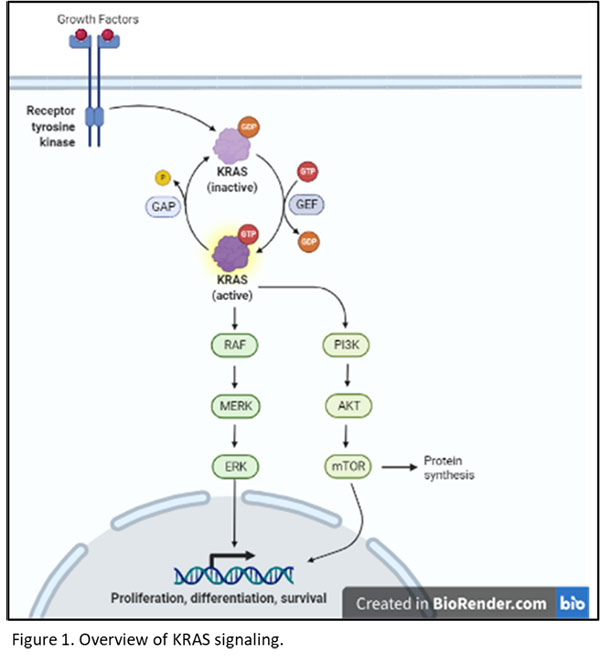
KRAS has become an important drug target in multiple cancers due to its central role in hypertrophic and pro-mitotic signaling. Hera provides several KRAS mutant xenograft cell line models in the SRG rat for researchers developing drug candidates targeting KRAS. KRAS is a small GTPase that is activated in response to growth factors including HGF, TGFα, and EGF. KRAS then activates the MAP kinase (MAPK; RAF/MEK/ERK) signaling pathway, driving ERK translocation to the nucleus, and resulting in transcription of pro-mitotic and pro-growth genes. Additionally, KRAS contributes to PI3K/AKT/mTOR signaling, leading to transcriptional activation as well as hypertrophic protein synthesis via mTOR1 (figure 1).

Activating mutations in one of the three RAS genes (HRAS, NRAS, and KRAS) have been observed in up to 20% of all tumors, with mutations in the KRAS gene observed in ~90% of pancreatic cancers, ~50% of colorectal cancers, and ~25% non-small cell lung cancers (NSCLC)1. The G12D mutation is most common in pancreatic and the G12C mutation is most common in NSCLC, while many colon cancers harbor both the G12D and G13 KRAS mutations2.

What Experimental Models Most Closely Replicate Human Tumors?

Heated interest in KRAS as an anticancer target has led to the development of numerous KRAS inhibitors such as Amgen’s Lumakras (sotorasib), recently approved for the treatment of NSCLC3. Although KRAS was first described in 1983, efforts to develop clinically effective KRAS inhibitors were largely unsuccessful until recently. Production of KRAS inhibitors has been stymied by lack of consistency in methods, reagents, and protein expression systems, with many groups using truncated KRAS proteins that exhibit altered tertiary structure and lack cell membrane interactions4. Furthermore, sensitivity to KRAS inhibition is highly cell-type specific, and numerous studies indicate that inhibition at multiple points in the KRAS signaling cascade may be necessary to achieve clinically relevant effects1. Thus, patient-derived xenografts and stable cell lines expressing full length KRAS G12C, G12D, and G13 mutant proteins are required for preclinical evaluations of KRAS inhibition.

Hera BioLabs’ SRG OncoRat® is immunodeficient and highly permissive to human xenografts and cell line inoculation. Developed on a Sprague-Dawley background, SRG OncoRats are Rag2/Il2rg double knockouts that lack mature B cells, T cells, and circulating NK cells5. Compared to immune-deficient mouse models, the SRG OncoRat® provides the following advantages:

  • Allows hosting for larger tumors (up to 10x volume compared to mice)
  • Increased tumor take-rates
  • Increased tumor growth kinetics
  • Serial blood and tissue sampling for PK/PD studies
  • Allows for the collection of efficacy data in the relevant toxicology/metabolism Sprague Dawley strain.

Which KRAS Mutant Cell Lines Have Been Successfully Grafted Into The SRG OncoRat®?

To date, Hera BioLabs has validated four KRAS mutant lines in the SRG OncoRat®: H358, HCT-116, MIA PaCa-2, and Capan-2 (table 1).

Hera - Blog - In vivo targeting of mutant KRAS using human cancer xenografts in the immunodeficient SRG OncoRat® - Figure 1

Capan-2, a human pancreatic ductal adenocarcinoma cell line, display epithelial morphology when grown in adherent tissue culture. Following xenograft into animals, Capan-2 form well-differentiated tumors. They express mutant KRAS (G12V) and elevated levels of the Epidermal Growth Factor Receptor (EGFR). In addition, they express wild-type p53 and normal levels of SMAD4 protein. When injected into immunocompromised SRG rats, they form well-differentiated tumors and are used as a PDX model for pancreatic cancer. The Capan-2 cells express mutant K-Ras (G12V), elevated Epidermal Growth Factor Receptor (EGFR), wild-type p53 and normal levels of the SMAD4 protein6. Figure 2 shows robust capan-2 tumor growth after inoculation into the SRG OncoRat®.

Hera - Blog - In vivo targeting of mutant KRAS using human cancer xenografts in the immunodeficient SRG OncoRat® - Figure 2

H358 NSCLC cells contain cytoplasmic structures that are characteristic of Club cells. These cells only have the KRAS G12C mutation, without any other tumor suppressor or oncogenic mutations and they are exceptionally useful for the study of KRAS, EGFR, BRAF, MEK, and ERK signaling. Despite their KRAS mutation, H358 cells are sensitive to anti-GFR therapies. These cells were derived from a metastatic site7, and our preliminary data indicate that H358 cells form metastases in the SRG OncoRat®. Tumor growth in the SRG OncoRat® is shown in Figure 3.

Hera - Blog - In vivo targeting of mutant KRAS using human cancer xenografts in the immunodeficient SRG OncoRat® - Figure 3

H441 Lung papillary adenocarcinoma cells were derived from a pericardial effusion metastasis in a 33-year-old man. In vitro, H441 form monolayers with epithelial barrier properties. These cells also harbor the TP53 A158L mutation and express surfactant protein A (SP-A). Like H358, H441 cells contain cytoplasmic structures that are characteristic of Club cells7,8. H441 inoculation induces robust tumor growth in the SRG OncoRat®, as shown in Figure 4.

Hera - Blog - In vivo targeting of mutant KRAS using human cancer xenografts in the immunodeficient SRG OncoRat® - Figure 4

HCT-116 human colon cancer cells display epithelial morphology and have been extensively characterized in proliferation, tumorigenicity, and drug screening studies. In vitro, HCT-116 are highly motile and subcutaneous xenografts in nude mice have demonstrated them to be highly tumorigenic9. When grafted into the SRG OncoRat®, tumor take rate was 100% and tumor volumes reached 1800 to 12,000 mm3 by 24 days post-inoculation. When equal cell volumes were inoculated into NSG mice and SRG OncoRats® tumors were roughly 5-fold larger in the rats (figure 5)5.

Hera - Blog - In vivo targeting of mutant KRAS using human cancer xenografts in the immunodeficient SRG OncoRat® - Figure 5

MIA PaCa-2 pancreatic ductal adenocarcinoma cells were obtained from a 65-year-old male. These cells are extremely well-characterized, with 1235 entries in PubMed. MIA PaCa-2 harbor TP53 mutations and homozygous deletions in the first 3 exons of CDKN2A/p16INK4A, without SMAD4/DPC4 mutations or microsatellite instability10. These cells express human colony stimulating factor, subclass I (CSF-I) and plasminogen activator. In vitro cells are adherent, with epithelial morphology. Subcutaneous inoculation with MIA PaCa-2 in the SRG OncoRat® yielded consistent tumor growth (figure 6)5.

Hera - Blog - In vivo targeting of mutant KRAS using human cancer xenografts in the immunodeficient SRG OncoRat® - Figure 6

Targeting KRAS Mutant Positive Cancers With The SRG OncoRat®

The SRG OncoRat® is a powerful tool for in vivo oncology studies, as it performs better than mouse models in several key ways. Our rats are extremely well-suited for hosting PDX and CDX cancer lines for analyses, including drug efficacy, tumor growth kinetics, and PK/PD studies. Tumor volumes are far larger than those obtained in mice, allowing for more detailed molecular characterization of tumors as well as PDX banking.

These qualities also make the SRG OncoRats® attractive candidates for use as patient avatars, wherein
personalized precision therapies can be rapidly tested in vivo to guide clinical decision making.

If your preclinical studies could use a boost, or you would like to see more data on the SRG Rat, Contact Charles River Labs for more information.

References

  1. Molina-Arcas, M., Samani, A. & Downward, J. Drugging the Undruggable: Advances on RAS Targeting in Cancer. Genes (Basel) 12, doi:10.3390/genes12060899 (2021).
  2. Hobbs, G. A., Der, C. J. & Rossman, K. L. RAS isoforms and mutations in cancer at a glance. J Cell Sci 129, 1287-1292, doi:10.1242/jcs.182873 (2016).
  3. Dunnett-Kane, V., Nicola, P., Blackhall, F. & Lindsay, C. Mechanisms of Resistance to KRAS(G12C) Inhibitors. Cancers (Basel) 13, doi:10.3390/cancers13010151 (2021).
  4. Esposito, D., Stephen, A. G., Turbyville, T. J. & Holderfield, M. New weapons to penetrate the armor: Novel reagents and assays developed at the NCI RAS Initiative to enable discovery of RAS therapeutics. Semin Cancer Biol 54, 174-182, doi:10.1016/j.semcancer.2018.02.006 (2019).
  5. Noto, F. K. et al. The SRG rat, a Sprague-Dawley Rag2/Il2rg double-knockout validated for human tumor oncology studies. PLoS One 15, e0240169, doi:10.1371/journal.pone.0240169 (2020).
  6. Kyriazis, A. A., Kyriazis, A. P., Sternberg, C. N., Sloane, N. H. & Loveless, J. D. Morphological, biological, biochemical, and karyotypic characteristics of human pancreatic ductal adenocarcinoma Capan-2 in tissue culture and the nude mouse. Cancer Res 46, 5810-5815 (1986).
  7. Brower, M., Carney, D. N., Oie, H. K., Gazdar, A. F. & Minna, J. D. Growth of cell lines and clinical specimens of human non-small cell lung cancer in a serum-free defined medium. Cancer Res 46, 798-806 (1986).
  8. Salomon, J. J. et al. The cell line NCl-H441 is a useful in vitro model for transport studies of human distal lung epithelial barrier. Mol Pharm 11, 995-1006, doi:10.1021/mp4006535 (2014).
  9. Rajput, A. et al. Characterization of HCT116 human colon cancer cells in an orthotopic model. J Surg Res 147, 276-281, doi:10.1016/j.jss.2007.04.021 (2008).
  10. Gradiz, R., Silva, H. C., Carvalho, L., Botelho, M. F. & Mota-Pinto, A. MIA PaCa-2 and PANC-1 – pancreas ductal adenocarcinoma cell lines with neuroendocrine differentiation and somatostatin receptors. Sci Rep 6, 21648, doi:10.1038/srep21648 (2016).