Evolution Of The Rat Model

Rats have been favored for drug development studies because the metabolism and pharmacokinetic properties of drugs in rats are most similar to humans. Rats are also preferable for xenograft studies because they allow for tumor volumes 10-fold higher than in mice, they are easier to surgically manipulate, and they can accommodate multiple blood samplings to assess the pharmacokinetic properties of a drug. To successfully generate cancer xenografts from humans in rats, the animal must be immunodeficient to prevent rejection of the xenograft by the animal’s immune system.

The first generation of immunodeficient rats is the nude rat. Nude rats are characterized as being devoid of T-cells, but still retaining functional B- and NK-cells. The nude rat accepts human xenografts, but studies have shown that nude rats have increased incidences of tumor regression likely related to age-dependent changes in immunocompetence 1-2.

The answer to some of these deficiencies was the development of severe combined immunodeficiency (SCID) rats. SCID rats are Prkdc deficient which means the rat has no B- or T-cells. SCID rats demonstrate severe immunodeficiencies without the “leaky” phenotype that is observed in SCID mice – where detectable levels of Ig are generated by a few clones of functional B-cells3. SCID rats also demonstrate growth retardation and exhibit premature senescence. SCID rats host xenografts successfully, but only survive for around a year if kept under very strict pathogen-free conditions.

In order to overcome the limitations of the SCID rat, Hera Biolabs developed the Sprague-Dawley Rag2 null (SDR) rat. SDR rats are generated on a Sprague-Dawley background – an albino, outbred lab rat that is preferred for metabolism and toxicity studies. Sprague-Dawley rats are also preferred for their calm demeanor, ease of handling, and larger size than Wistar rats. The SDR rat is null for the Rag2 gene which results in a lack of B-cells and a severely reduced T-cell population4. These rats are highly permissible to xenografts and xenografts demonstrate greater uniformity in growth profiles. SDR rats have also been shown to successfully host large, rapidly developing xenografts of human cancer cell lines (e.g. H358, VCaP) that are difficult or impossible to generate in NSG mouse models. The SDR rat maintains a population of NK-cells which makes this model unlikely to accept xenografts of all tumor types.

The researchers at Hera Biolabs noted that a limitation of the SDR model is the large population of NK-cells that is maintained. To overcome this limitation, an evolution on the SDR rat has been developed at Hera biolabs that contains an additional Il2gamma null, known as the OncoRat®-SRG™. The OncoRat is completely depleted of B-cells, T-cells, and NK-cells. The OncoRat boasts an engraftment take rate of 90%+ using non-small cell lung cancer (NSCLC) patient derived xenograft model establishment as the example.

Hera - Blog - Evolution of the rat model - Figure 1

References

  1. Colston, M. J.; Fieldsteel, A. H.; Dawson, P. J., Growth and regression of human tumor cell lines in congenitally athymic (rnu/rnu) rats. Journal of the National Cancer Institute 1981, 66 (5), 843-8.
  2. Maruo, K.; Ueyama, Y.; Kuwahara, Y.; Hioki, K.; Saito, M.; Nomura, T.; Tamaoki, N., Human tumour xenografts in athymic rats and their age dependence. British Journal of Cancer 1982, 45 (5), 786-789.
  3. Mashimo, T.; Takizawa, A.; Kobayashi, J.; Kunihiro, Y.; Yoshimi, K.; Ishida, S.; Tanabe, K.; Yanagi, A.; Tachibana, A.; Hirose, J.; Yomoda, J.-i.; Morimoto, S.; Kuramoto, T.; Voigt, B.; Watanabe, T.; Hiai, H.; Tateno, C.; Komatsu, K.; Serikawa, T., Generation and Characterization of Severe Combined Immunodeficiency Rats. Cell Reports 2012, 2 (3), 685-694.
  4. Noto, F. K.; Adjan Steffey, V.; Tong, M.; Ravichandran, K.; Zhang, W.; Arey, A.; McClain, C. B.; Ostertag, E.; Mazhar, S.; Sangodkar, J.; Difeo, A.; Crawford, J.; Narla, G.; Jamling, T. Y., Sprague Dawley Rag2 null rats created from engineered spermatogonial stem cells are immunodeficient and permissive to human xenografts. Mol Cancer Ther 2018.
In Vivo Targeting Of Mutant KRAS Using Human Cancer Xenografts In The Immunodeficient SRG OncoRat®

Targeting KRAS In Oncology Research?

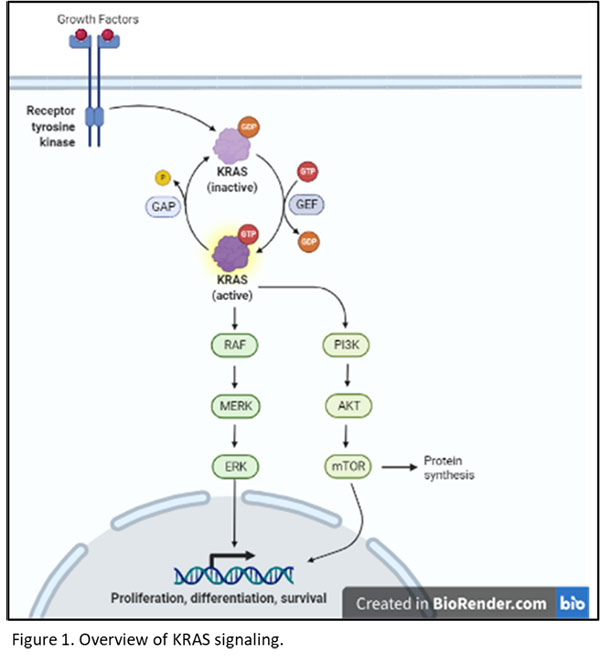
KRAS has become an important drug target in multiple cancers due to its central role in hypertrophic and pro-mitotic signaling. Hera provides several KRAS mutant xenograft cell line models in the SRG rat for researchers developing drug candidates targeting KRAS. KRAS is a small GTPase that is activated in response to growth factors including HGF, TGFα, and EGF. KRAS then activates the MAP kinase (MAPK; RAF/MEK/ERK) signaling pathway, driving ERK translocation to the nucleus, and resulting in transcription of pro-mitotic and pro-growth genes. Additionally, KRAS contributes to PI3K/AKT/mTOR signaling, leading to transcriptional activation as well as hypertrophic protein synthesis via mTOR1 (figure 1).

Activating mutations in one of the three RAS genes (HRAS, NRAS, and KRAS) have been observed in up to 20% of all tumors, with mutations in the KRAS gene observed in ~90% of pancreatic cancers, ~50% of colorectal cancers, and ~25% non-small cell lung cancers (NSCLC)1. The G12D mutation is most common in pancreatic and the G12C mutation is most common in NSCLC, while many colon cancers harbor both the G12D and G13 KRAS mutations2.

What Experimental Models Most Closely Replicate Human Tumors?

Heated interest in KRAS as an anticancer target has led to the development of numerous KRAS inhibitors such as Amgen’s Lumakras (sotorasib), recently approved for the treatment of NSCLC3. Although KRAS was first described in 1983, efforts to develop clinically effective KRAS inhibitors were largely unsuccessful until recently. Production of KRAS inhibitors has been stymied by lack of consistency in methods, reagents, and protein expression systems, with many groups using truncated KRAS proteins that exhibit altered tertiary structure and lack cell membrane interactions4. Furthermore, sensitivity to KRAS inhibition is highly cell-type specific, and numerous studies indicate that inhibition at multiple points in the KRAS signaling cascade may be necessary to achieve clinically relevant effects1. Thus, patient-derived xenografts and stable cell lines expressing full length KRAS G12C, G12D, and G13 mutant proteins are required for preclinical evaluations of KRAS inhibition.

Hera BioLabs’ SRG OncoRat® is immunodeficient and highly permissive to human xenografts and cell line inoculation. Developed on a Sprague-Dawley background, SRG OncoRats are Rag2/Il2rg double knockouts that lack mature B cells, T cells, and circulating NK cells5. Compared to immune-deficient mouse models, the SRG OncoRat® provides the following advantages:

  • Allows hosting for larger tumors (up to 10x volume compared to mice)
  • Increased tumor take-rates
  • Increased tumor growth kinetics
  • Serial blood and tissue sampling for PK/PD studies
  • Allows for the collection of efficacy data in the relevant toxicology/metabolism Sprague Dawley strain.

Which KRAS Mutant Cell Lines Have Been Successfully Grafted Into The SRG OncoRat®?

To date, Hera BioLabs has validated four KRAS mutant lines in the SRG OncoRat®: H358, HCT-116, MIA PaCa-2, and Capan-2 (table 1).

Hera - Blog - In vivo targeting of mutant KRAS using human cancer xenografts in the immunodeficient SRG OncoRat® - Figure 1

Capan-2, a human pancreatic ductal adenocarcinoma cell line, display epithelial morphology when grown in adherent tissue culture. Following xenograft into animals, Capan-2 form well-differentiated tumors. They express mutant KRAS (G12V) and elevated levels of the Epidermal Growth Factor Receptor (EGFR). In addition, they express wild-type p53 and normal levels of SMAD4 protein. When injected into immunocompromised SRG rats, they form well-differentiated tumors and are used as a PDX model for pancreatic cancer. The Capan-2 cells express mutant K-Ras (G12V), elevated Epidermal Growth Factor Receptor (EGFR), wild-type p53 and normal levels of the SMAD4 protein6. Figure 2 shows robust capan-2 tumor growth after inoculation into the SRG OncoRat®.

Hera - Blog - In vivo targeting of mutant KRAS using human cancer xenografts in the immunodeficient SRG OncoRat® - Figure 2

H358 NSCLC cells contain cytoplasmic structures that are characteristic of Club cells. These cells only have the KRAS G12C mutation, without any other tumor suppressor or oncogenic mutations and they are exceptionally useful for the study of KRAS, EGFR, BRAF, MEK, and ERK signaling. Despite their KRAS mutation, H358 cells are sensitive to anti-GFR therapies. These cells were derived from a metastatic site7, and our preliminary data indicate that H358 cells form metastases in the SRG OncoRat®. Tumor growth in the SRG OncoRat® is shown in Figure 3.

Hera - Blog - In vivo targeting of mutant KRAS using human cancer xenografts in the immunodeficient SRG OncoRat® - Figure 3

H441 Lung papillary adenocarcinoma cells were derived from a pericardial effusion metastasis in a 33-year-old man. In vitro, H441 form monolayers with epithelial barrier properties. These cells also harbor the TP53 A158L mutation and express surfactant protein A (SP-A). Like H358, H441 cells contain cytoplasmic structures that are characteristic of Club cells7,8. H441 inoculation induces robust tumor growth in the SRG OncoRat®, as shown in Figure 4.

Hera - Blog - In vivo targeting of mutant KRAS using human cancer xenografts in the immunodeficient SRG OncoRat® - Figure 4

HCT-116 human colon cancer cells display epithelial morphology and have been extensively characterized in proliferation, tumorigenicity, and drug screening studies. In vitro, HCT-116 are highly motile and subcutaneous xenografts in nude mice have demonstrated them to be highly tumorigenic9. When grafted into the SRG OncoRat®, tumor take rate was 100% and tumor volumes reached 1800 to 12,000 mm3 by 24 days post-inoculation. When equal cell volumes were inoculated into NSG mice and SRG OncoRats® tumors were roughly 5-fold larger in the rats (figure 5)5.

Hera - Blog - In vivo targeting of mutant KRAS using human cancer xenografts in the immunodeficient SRG OncoRat® - Figure 5

MIA PaCa-2 pancreatic ductal adenocarcinoma cells were obtained from a 65-year-old male. These cells are extremely well-characterized, with 1235 entries in PubMed. MIA PaCa-2 harbor TP53 mutations and homozygous deletions in the first 3 exons of CDKN2A/p16INK4A, without SMAD4/DPC4 mutations or microsatellite instability10. These cells express human colony stimulating factor, subclass I (CSF-I) and plasminogen activator. In vitro cells are adherent, with epithelial morphology. Subcutaneous inoculation with MIA PaCa-2 in the SRG OncoRat® yielded consistent tumor growth (figure 6)5.

Hera - Blog - In vivo targeting of mutant KRAS using human cancer xenografts in the immunodeficient SRG OncoRat® - Figure 6

Targeting KRAS Mutant Positive Cancers With The SRG OncoRat®

The SRG OncoRat® is a powerful tool for in vivo oncology studies, as it performs better than mouse models in several key ways. Our rats are extremely well-suited for hosting PDX and CDX cancer lines for analyses, including drug efficacy, tumor growth kinetics, and PK/PD studies. Tumor volumes are far larger than those obtained in mice, allowing for more detailed molecular characterization of tumors as well as PDX banking.

These qualities also make the SRG OncoRats® attractive candidates for use as patient avatars, wherein
personalized precision therapies can be rapidly tested in vivo to guide clinical decision making.

If your preclinical studies could use a boost, or you would like to see more data on the SRG Rat, Contact Charles River Labs for more information.

References

  1. Molina-Arcas, M., Samani, A. & Downward, J. Drugging the Undruggable: Advances on RAS Targeting in Cancer. Genes (Basel) 12, doi:10.3390/genes12060899 (2021).
  2. Hobbs, G. A., Der, C. J. & Rossman, K. L. RAS isoforms and mutations in cancer at a glance. J Cell Sci 129, 1287-1292, doi:10.1242/jcs.182873 (2016).
  3. Dunnett-Kane, V., Nicola, P., Blackhall, F. & Lindsay, C. Mechanisms of Resistance to KRAS(G12C) Inhibitors. Cancers (Basel) 13, doi:10.3390/cancers13010151 (2021).
  4. Esposito, D., Stephen, A. G., Turbyville, T. J. & Holderfield, M. New weapons to penetrate the armor: Novel reagents and assays developed at the NCI RAS Initiative to enable discovery of RAS therapeutics. Semin Cancer Biol 54, 174-182, doi:10.1016/j.semcancer.2018.02.006 (2019).
  5. Noto, F. K. et al. The SRG rat, a Sprague-Dawley Rag2/Il2rg double-knockout validated for human tumor oncology studies. PLoS One 15, e0240169, doi:10.1371/journal.pone.0240169 (2020).
  6. Kyriazis, A. A., Kyriazis, A. P., Sternberg, C. N., Sloane, N. H. & Loveless, J. D. Morphological, biological, biochemical, and karyotypic characteristics of human pancreatic ductal adenocarcinoma Capan-2 in tissue culture and the nude mouse. Cancer Res 46, 5810-5815 (1986).
  7. Brower, M., Carney, D. N., Oie, H. K., Gazdar, A. F. & Minna, J. D. Growth of cell lines and clinical specimens of human non-small cell lung cancer in a serum-free defined medium. Cancer Res 46, 798-806 (1986).
  8. Salomon, J. J. et al. The cell line NCl-H441 is a useful in vitro model for transport studies of human distal lung epithelial barrier. Mol Pharm 11, 995-1006, doi:10.1021/mp4006535 (2014).
  9. Rajput, A. et al. Characterization of HCT116 human colon cancer cells in an orthotopic model. J Surg Res 147, 276-281, doi:10.1016/j.jss.2007.04.021 (2008).
  10. Gradiz, R., Silva, H. C., Carvalho, L., Botelho, M. F. & Mota-Pinto, A. MIA PaCa-2 and PANC-1 – pancreas ductal adenocarcinoma cell lines with neuroendocrine differentiation and somatostatin receptors. Sci Rep 6, 21648, doi:10.1038/srep21648 (2016).

Gene Editing With piggyBac: Creating A Curative Treatment For Beta-Thalassemia

Genetic Engineering Can Soon Lead To Lifelong Cures For Diseases That Were Previously Incurable – And ß-thalassemia Is The Perfect Example.

Through novel therapeutic methods like cell therapy, scientists have found a way to cure a disease that used to only be manageable. Previous gene editing methods used to treat ß-thalassemia were limited and nonspecific; however, advances like piggyBac and CRISPR-Cas9 based gene editing tools are opening doors for better patient outcomes.

What Is ß-Thalassemia?

Beta-thalassemia is a heritable genetic disease caused by a mutation in the hemoglobin beta (HBB) gene. Inheriting a mutated HBB gene leads to a lower production of hemoglobin.
Decreased hemoglobin is a problem because red blood cells, which carry hemoglobin, are used to transport oxygen throughout the body, so patients diagnosed with ß-thalassemia are often anemic. Patients with severe symptoms typically require invasive and frequent treatments with frequent blood transfusions and iron chelation therapy.

Previously, one patient diagnosed with ß-thalassemia had been treated successfully by having lentiviral delivery of a normal HBB gene into his hematopoietic stem and progenitor cells (HSPC). While successful for this patient, there is a high risk of off-target integration that makes lentiviral delivery an undesirable treatment option.

Viral vector directed gene therapies can be harmful, usually through insertion into multiple sites of the host genome. Problems in immune response could occur, and there remains a possibility of insertional mutations.

Steps To A Cure Through Next Generation Gene Editing

An improved ß-thalassemia treatment would correct the underlying mutation of the HBB gene. Correction of the HBB gene would allow for normal production of hemoglobin and ultimately better oxygen transport.

Using fibroblasts collected from the same patient, it is possible to generate induced pluripotent stem cells (iPSCs), which are then modified to carry the corrected form of the HBB gene. These cells could then be introduced back into the patient as HSPCs, curing the patient.

The bacteria derived RNA-directed Cas9 nuclease, also known as CRISPR-Cas9, can perform double stranded breaks in DNA in a directed manner. This makes room in the genome for insertion of desired genes. After the break is performed, the CRISPR-Cas9 technology can be combined with piggyBac in iPSCs to correct the HBB gene mutation.

How Does piggyBac Work?

The piggyBac system is a gene editing technology that can insert and remove genetic cargo from cells. This is done through transposase activity, allowing for the target gene to be cloned into a transposon vector and inserted into the region of interest.

PiggyBac has been shown to have little to no unintentional downstream effects, and is able to insert and remove genetic material without leaving behind any kind of “footprint” – meaning only the desired gene is inserted. Alternatively, the Cre/loxP system, another tool to insert/remove genes, leaves behind 34 bp that are foreign to the cell.

In the case of ß-thalassemia, piggyBac is able to remove the selection cassette and all foreign sequences, leaving behind only the corrected HBB gene and restoring normal hemoglobin activity.

Gene Editing Tools That Can Be Used With piggyBac

To use piggyBac to its full potential, it can be used in combination with gene editing tools that cause double stranded breaks in DNA. These tools are all nuclease based, meaning the breaks are caused by an enzyme.
There are three comparable DNA cleaving methods that target specific sites within DNA, which are:

  • Zinc finger nucleases (ZFN)
  • Transcription activator-like effector nucleases (TALENs),
  • Cas9 nucleases

Of these, Cas9 is the most reliable, readily available, and easiest to synthesize.

ZFNs have been known to be both expensive and difficult when it comes to their design, making them difficult to acquire for research.

TALENs are inefficient and difficult to validate, because many pairs are needed to ensure their cutting efficiencies.

Cas9 nucleases are efficient when used in systems such as CRISPR-Cas9, but off-target effects can be a limiting factor. However, Hera has built on the CRISPR-Cas9 platform to create the precise genome editing tool Cas-CLOVER which functions with no observable off-target effects.

Learn More About piggyBac, Cas-CLOVER And Hera BioLabs

Here at Hera, we use our proprietary gene editing system, Cas-CLOVER, which expands on the CRISPR-Cas9 platform for more accurate gene editing. Unlike CRISPR-Cas9, which is directed by one guide RNA, Cas-CLOVER has a dimeric guide system with one guide RNA and one Cas9 protein on each side of the target site. Because of its dimeric nature, Cas-CLOVER is more accurate than CRISPR-Cas9 and results in no observable off-target effects.
Moreover, Cas-CLOVER falls under a different set of patents than CRISPR-Cas9 which allows for hassle-free licensing agreements. Hera provides access to the Cas-CLOVER technology for drug discovery and early development.

Hera also provides licenses to piggyBac, which can be combined with Cas-CLOVER for scarless gene editing.
Whether you’re performing basic research or developing curative treatments like those for ß-thalassemia, Hera is ready to work with you to push your science forward.

To learn more about Hera how Hera utilizes the piggyBac transposase system click here. If you’d like to discuss licensing and forming a partnership reach out to the Hera team today by clicking here.

References

Xie, F., Ye, L., Chang, J. C., Beyer, A. I., Wang, J., Muench, M. O., & Kan, Y. W. (2014). Seamless gene correction of β-thalassemia mutations in patient-specific iPSCs using CRISPR/Cas9 and piggyBac. Genome research, 24(9), 1526–1533. https://doi.org/10.1101/gr.173427.114

The OncoRat® Is The Ideal Host For Patient-Derived Xenografts Of Ovarian Cancer Cells

Ovarian cancer is the most lethal gynecological cancer in the United States. Advances in cytotoxic, platinum-based chemotherapeutics combined with tumor resection surgery allows approximately 80% of these patients to achieve remission. Unfortunately, the vast majority have a tumor recurrence within 12-24 months and relapsed ovarian cancer is recognized as being universally incurable1-2.

Large genomic analyses of ovarian tumors, using databases including The Cancer Genome Atlas (TCGA), have revealed that ovarian tumors are highly heterogeneous. Specifically, no over-represented, targetable oncogenic mutations were revealed. Thus, alternative strategies must be employed to identify targetable driver pathways and sources of drug resistance in ovarian tumors1.

Ovarian tumors have a high degree of cell-population heterogeneity and also contain populations of cancer stem cells (CSCs) that contribute to growth and drug resistance in these cancers. It has been demonstrated that exposure of ovarian cancer cells to chemotherapeutics induces a gene expression program increasing cell-stemness, including the expression of CSC marker. For this reason, it is incredibly important that ovarian tumor models mimic the disease physiology in the patient as much as possible.

To leverage and study the natural heterogeneity of ovarian tumors, the DiFeo lab, lead by Dr. Analisa DiFeo, took resected high-grade serous ovarian cancer (HGSOC) tissue from a patient and established a patient-derived xenograft in a murine host – designated OV81. The importance of OV81 is that HGSOC tumors make up around 70% of the ovarian tumors diagnosed. Additionally, OV81 is cisplatin-naïve, so the tumor landscape is unchanged by chemotherapeutic treatment and the tissue taken is the best representation of the patient’s tumor.

From this patient-derived xenograft, the DiFeo lab isolated a cell line for in vitro study, designated OV81.2. OV81.2 cells have been used to identify some of the mechanisms of chemo-induced stemness, the mechanisms of drug resistance development, and metabolic changes that are unique to chemo-resistant ovarian cancer cells1-3. Having OV81.2 cells derived from a chemo-naïve ovarian tumor is paramount to identifying the mechanisms that define drug resistance.

Further examination of drug resistance development will require study replication and expansion into an in vivo xenograft model. OV81.2 cells were implanted into the OncoRat® and NSG mice. After three weeks of growth, the tumor xenografts in the OncoRat had grown to volumes nearly ten-fold higher than the NSG mouse. This demonstrates that the OncoRat is the ideal xenograft host for OV81.2 cells for further preclinical study of this important cell line.

Hera - Blog - The OncoRat® is the ideal host for patient-derived xenografts of ovarian cancer cells - Figure 1

References

  1. Wiechert, A.; Saygin, C.; Thiagarajan, P. S.; Rao, V. S.; Hale, J. S.; Gupta, N.; Hitomi, M.; Nagaraj, A. B.; DiFeo, A.; Lathia, J. D.; Reizes, O., Cisplatin induces stemness in ovarian cancer. Oncotarget 2016, 7 (21), 30511-30522.
  2. Hudson, C. D.; Savadelis, A.; Nagaraj, A. B.; Joseph, P.; Avril, S.; DiFeo, A.; Avril, N., Altered glutamine metabolism in platinum resistant ovarian cancer. Oncotarget 2016, 7 (27), 41637-41649.
  3. Nagaraj, A. B.; Joseph, P.; Kovalenko, O.; Singh, S.; Armstrong, A.; Redline, R.; Resnick, K.; Zanotti, K.; Waggoner, S.; DiFeo, A., Critical role of Wnt/β-catenin signaling in driving epithelial ovarian cancer platinum resistance. Oncotarget 2015, 6 (27), 23720-23734.

Understanding Transporter-Mediated Drug-Drug Interactions Using Humanized Liver Mice

Pharmaceutical researchers and regulators are increasingly aware of the influence that transporters have on the pharmacokinetics of drugs. These transporter mediated drug-drug interactions (DDIs) can precipitate adverse reactions in patients and as a result, safety guidelines across the United States, Europe and Japan have been updated to require safety assessments of DDIs in large scale clinical trials of pharmaceuticals.

Patient drug interactions related to hepatic organic anion-transporting polypeptides (OATPs) are of particular concern when evaluating statins. According to a recent article by Uchida, et al published in Drug Metabolism and Disposition, the systemic exposure of rosuvastatin, a drug widely used to treat elevated cholesterol levels, was “significantly increased by concomitant dosing with cyclosporine A, and commonly lower dosage of rosuvastatin is therefore required when administered with cyclosporine A” in a clinical environment.

Previously, in vivo animal model studies have been conducted to predict DDIs in humans, but the reality is that often times little correlation exists between preclinical murine outcomes and actual clinical outcomes in patients.  To combat this, “knockout models lacking murine oatp isoforms and OATP-humanized transgenic mice have been developed” notes Uchida, et al; however, the pharmacokinetics may still be affected by other inherent murine transporters.

As such the researchers in this study examined the effectiveness of using PXB-mice (chimeric mice with humanized livers and high levels of human hepatocytes) to predict human DDIs between rosuvastatin and cyclosporine A.  The “observed DDIs in vivo were considered to be reasonable,” according to Uchida, et al, and suggest that humanized liver mice such as PXB and TK-NOG mice could play an important role in drug discovery and the evaluation of DDIs in a preclinical setting.

Humanized Mouse Model Allows For Study Of Immune Response To Decellularized ECM Biomaterials

Humanized rodent models have been used extensively for studying autoimmune diseases, viral infections, xenogeneic transplantation and, more recently, allogenic stem cell transplantation; however, until now, researchers have not used these murine models for studies in the field of biomaterials. In their recent paper published in Biomaterials, Wang et al used a humanized mouse model to “assess the human immune response to decellularized extracellular matrix (ECM) biomaterials, specifically injectable hydrogels derived from porcine or human myocardium, which Biomaterials, Wang et al used a humanized mouse model to “assess the human immune response to decellularized extracellular matrix (ECM) biomaterials, specifically injectable hydrogels derived from porcine or human myocardium, which were initially developed to treat the heart post-myocardial infarction.”

This is important because the rodents typically used for biocompatibility testing provide limited representation of the human immune response because of differences in immune cell receptors, cytokine expression and response to various stimuli highlight how responses in rodents might not correlate with outcomes observed in humans. “Immune cells in the humanized mouse model, particularly T-helper cells, responded distinctly between the xenogeneic and allogeneic biomaterials,” according to Wang et al. “The allogeneic extracellular matrix derived hydrogels elicited significantly reduced total, human specific, and CD4 T-helper cell infiltration in humanized mice compared to xenogeneic extracellular matrix hydrogels, which was not recapitulated in wild type mice.”

Although this model certainly still has some limitations, the study was successful and gives high hopes to improving outcomes in the field of biomaterials, which continue to play an integral role in applications related to wound healing, hernia repair, skeletal muscle defect repair and hear attacks. As suggested by Wang et al, “decellularized ECM biomaterials are an attractive platform for biomaterial therapies since tissue derived from ECM can promote tissue remodeling by influencing cellular metabolism, proliferation, migration, maturation and differentiation” and these humanized mouse models will allow for further study of human immune cell responses to biomaterials in an in vivo environment.

Chimeric Humanized Mouse Models: Understanding Human And Mouse Cell Interactions

Humanized liver mouse models are increasingly being used in preclinical trials and have allowed for groundbreaking in-vivo research to evaluate everything from human-specific drug toxicity and efficacy to gene therapies. Unlike their transgenic mouse model counterparts, chimeric liver mouse models that include human hepatocytes and it is important for researchers to better understand the interactions between the implanted human cells and native mouse cells especially for drug metabolism studies.

In a recent study by Chow et al published in The Journal of Pharmacology and Experimental Therapeutics, it was shown that as a result of the species mismatch between human and mouse cells certain deficiencies are increasingly common, including dysregulation of hepatocyte proliferation and bile acid homeostasis in hFRGN livers that led to hepatotoxicity, gallbladder distension, liver deformity and other extrahepatic changes. “Although the nuclear receptors in human and other species share common targets, species difference in nuclear receptor activation exists”, and Chow et al suggest that additional research may be necessary to fully understand the inter-organ communication between human and mouse organs in h-chimeric mice.

Specifically, the miscommunication between human hepatocytes and murine stellate cells (which typically signal to hepatocytes to stop proliferating) is an important consideration. When this occurs, intracellular spaces are frequently reduced and cholangiocyte growth is inhibited, which can result in reduced bile flow as well as increased bile acid accumulation and toxicity.
Although we do not believe that any of these factors are reason enough to discontinue the use of humanized mouse or rat models for preclinical research, Chow et al do point out the need for increased awareness and the importance of addressing these deficiencies when reporting data in human drug metabolism studies.

Transposon Mutagenesis Helps Identify Genes Mediating Drug Resistance In The Treatment Of CLL

First time treatment of Chronic Lymphocratic Leukemia (CLL) generally requires a chemotherapy regimen that includes fludarabine. And although this potent drug combination has an astounding overall response rate of more than 90%, the unfortunate reality is that most patience will eventually relapse. And even more concerning is that in addition to the relatively small percentage of patients who are inherently resistant to fludarabine treatments from the start, with each subsequent use of this chemotherapy cocktail, data shows increased patient populations with acquired resistance to fludarabine-based chemotherapy, which ultimately presents a significant challenge for long-term disease control.

In order to better understand which specific genes and genetic pathways are mediating fludarabine resistance, Pandzic et al performed a “piggyBac transposon mutagenesis screen in a human CLL cell line” and their findings were recently reported in Clinical Cancer Research. In this study, a CLL cell line was subjected to random mutagenesis through integration of piggyBac transposons into genomic DNA. The cells were screened for resistance to fludarabine and the insertion sites of the piggyBac transposons identified through the use of Splinkerette PCR (spPCR). This screen not only revealed known resistance mediator genes, such as DCK (deoxycytidine kinase), but it also identified three novel genes, including BMP2K, which was shown to modulate response to fludarabine, although it had previously not been linked to CLL patients with fludarabine resistance.

This study demonstrated that piggyBac transposon mutagenesis screens have the ability to help lead the way when it comes to identifying genes that mediate patient sensitivity to specific drug therapies, including, but not limited to fludarabine-based chemotherapy. The piggyBac transposon is one of Hera BioLabs core technologies and we can assist with establishing various genome engineering and mutagenesis screens utilizing piggyBac in combination with CRISPR/Cas9.

Orthotopic vs. Subcutaneous Xenograft Models of Human Cancer

orthotopic xenografts and orthotopic PDXs for GBM in mice and rats Orthotopic vs. Subcutaneous Xenograft Models of Human Cancer

Subcutaneously implanted xenografts or patient-derived xenografts (PDXs) are a commonly used tool in the study of cancer.  Orthotopic xenografts are defined as the implantation of cancer cells into the same organ or tissue from which the cancer originated in the human, while subcutaneous xenografts are the implantation of cancer cells under the skin of an immunodeficient mouse or SRG rat.  Oncology researchers have differing opinions on which type of model to choose between when comparing orthotopic vs xenografts that are implanted subcutaneously (subq).

Why researchers choose to use a subcutaneous xenografts model:

  1. Ease-of-use: Subcutaneous xenografts are easier to implant, and monitor compared to orthotopic xenografts, which may require specialized surgical techniques. Subq implantation is an easy to learn technique and is not considered an invasive surgery.  Once tumor growth is observed, tumor volumes are easily measured by hand with a caliper enabling efficient tracking of tumor growth.
  2. Readily available models:  Since tumor measurements can be taken by calipers, the xenograft cell lines don’t need to be modified to express fluorescent or bioluminescent genes for assessment of tumor growth and there is a large number of already established models with historic data or publications for comparison when using a subcutaneous model.
  3. Cost considerations: Because orthotopic xenografts are more technically challenging to perform and require in vivo imaging to monitor tumor growth, researchers choose to not pursue the more resource intensive approach when preparing a cohort of animals for drug efficacy studies.

The advantages of choosing an orthotopic xenograft or PDX instead of using a subcutaneous model:

  1.  The tumor microenvironment of the xenograft or PDX implanted into the organ or tissue of origin may play a role in tumor growth and response to therapy. Orthotopic xenografts are thought to better mimic the native tumor microenvironment, including stromal cell components.
  2. Tumor growth rate: The rate of tumor growth may differ between orthotopic and subcutaneous xenografts due to differences in the tumor microenvironment and local nutrient supply. This may be particularly important when establishing PDXs which don’t have a high success rate implanted in the subcutaneous space.
  3. Tumor metastasis: Orthotopic xenografts may more accurately replicate the metastatic behavior of human tumors compared to subcutaneous xenografts.For example, orthotopic xenograft models more closely mimic the metastases observed in human prostate cancer patients, according to a 2016 study published in the Journal of Cellular Biochemistry by Zhang, et al.The results of this study clearly show “very different tumor behavior at the orthotopic and subcutaneous sites of human prostate cancer PC-3 in athymic nude mice,” according to Zhang, et al. “By day-2 after tumor implantation, the orthotopic tumor is already highly vascularized and the cancer cells have begun to migrate out of the tumor. In contrast, the subcutaneous tumor only begins to be vascularized by day-3 and cells to not migrate from the tumor.” Additionally, angiogenesis is much more extensive in the orthotopic tumor compared to the subcutaneous tumor over a two week period.Specifically, the orthotopic PC-3-GFP tumor is observed to grow very rapidly and presents distinct metastases in the lymph nodes by day-3 and evidence of metastases in the abdominal cavity by day-7. Compare this to the PDX model which, after a full 14 days, showed no evidence of invasion or metastasis associated with the subcutaneous tumor, even after the lymph nodes and abdominal cavities of the mouse was extensively explored.Using orthotopically-implanted PC-3-GFP cells, Zhang et al were also able to observe metastatic cells that migrated from the primary tumor to various organ systems, thereby demonstrating that “PC-3 has multiple metastatic routes similar to hormone-independent advanced-stage prostate cancer in the clinic.” As researchers continue to better understand the process by which metastases occur in PC-3 and other tumor types using orthotopic xenografts, the possibility for translational success in improved.

Overall, the choice between orthotopic and subcutaneous xenografts depends on the research question and the specific characteristics of the cancer model being studied. Both methods have advantages and disadvantages, and researchers should carefully consider the relevant factors before making a decision.

The SRG Rat for Orthotopic vs. Subcutaneous Xenografts

Whether you are considering subcutaneous or orthotopic approach to conducting your xenograft or PDX study, the SRG rat can provide certain advantages to both approaches.  First, the larger size of the SRG rat makes orthotopic xenograft implantations easier and less prone to error.  For example, sub renal/kidney capsule implants or colorectal both considered difficult surgeries, but with a larger rodent host there is more tolerance for successful implantation into the precise target tissue.  Secondly, the SRG rat shows a more human-like tumor microenvironment, even in the subcutaneous space, providing a more translational model for drug efficacy studies, and better tumor engraftment and growth kinetics regardless of site of tumor implantation.

The SRG rat is particularly applicable to the study of glioblastoma or other brain cancers. With these cancer types orthotopic xenografts are essential because having a intact blood-brain barrier is requirement to fully understand drug efficacy.  Surgical implantations can be very precise into various rat brain locations (including brain stem) with stereotactic injection equipment and the SRG rat tolerates a high tumor burden allowing for a longer window of study compared to mouse models.

You can learn more about how researchers are using the SRG rat HERE.


HIV-1 Gene Therapies Considered: RNAi Versus CRISPR-Cas

Though human immunodeficiency virus type 1 (HIV-1) can now be effectively treated to prevent disease progression through the use of potent antiviral drugs, decades after this disease’s discovery, there still is no cure for this precursor to acquired immune deficiency syndrome, also known as AIDS. In a recent article published in the journal Biochemical Society Transactions by Herrera-Carrillo and Berkhout from the Center for Infection and Immunity Amsterdam (CINIMA), new possible gene therapy approaches, including the use of RNAi and CRISPR-cas, are considered and discussed.

Though the end goal of each of these anti-HIV therapeutic options is the same – to stop the replication of HIV-1 – the two proposed mechanisms vary greatly in their biological origin: RNAi acts through suppressing mRNA and CRISPR targets the DNA. And although both RNAi and CRISPR-cas mechanisms both offer some significant hope for future clinical applications, neither is without risk and both may induce unwanted side effects at the cellular level. RNAi, for example, may cause “saturation or off-targeting of unrelated mRNAs” and CRISPR-cas can cause “permanent mutagenic effects” via cleavage of off-target DNA sequences, according to Herrera-Carrillo, et al.

The biggest problem with both RNAi and CRISPR-cas gene therapies is that one cannot reliably predict these adverse events, indicating that the safety and efficacy of each of these new gene therapies should be tested and verified in appropriate in vivo models. Herrera-Carrillo, et al tested the combinatorial RNAi therapy using a humanized immune system mouse model and a “single RNA-based anti-HIV gene therapy has moved into clinical trials” as a result. The CRISPR-cas system, however, still requires additional safety tests to more fully understand the “sustained expression of this foreign endonuclease in human cells, which may possibly lead to off-target cleavage events.”

The field of gene therapy has recently made great strides in the advancement of human applications. As additional in vivo testing in humanized rodent models continues, it is likely that researchers will develop increasingly efficient and safer therapeutic strategies designed to suppress the replication of HIV-1.