Genetically Immortalized Cells: Unlocking the Potential for Scalable Cultured Meat Production

[fusion_builder_container type=”flex” hundred_percent=”no” equal_height_columns=”no” hide_on_mobile=”small-visibility,medium-visibility,large-visibility” background_position=”center center” background_repeat=”no-repeat” fade=”no” background_parallax=”none” parallax_speed=”0.3″ video_aspect_ratio=”16:9″ video_loop=”yes” video_mute=”yes” border_style=”solid”][fusion_builder_row][fusion_builder_column type=”1_1″ layout=”1_1″ background_position=”left top” border_style=”solid” border_position=”all” spacing=”yes” background_repeat=”no-repeat” margin_top=”0px” margin_bottom=”0px” animation_speed=”0.3″ animation_direction=”left” hide_on_mobile=”small-visibility,medium-visibility,large-visibility” center_content=”no” last=”true” hover_type=”none” first=”true” min_height=”” link=”” background_blend_mode=”overlay”][fusion_text columns=”” column_min_width=”” column_spacing=”” rule_style=”default” rule_size=”” rule_color=”” hue=”” saturation=”” lightness=”” alpha=”” content_alignment_medium=”” content_alignment_small=”” content_alignment=”” hide_on_mobile=”small-visibility,medium-visibility,large-visibility” sticky_display=”normal,sticky” class=”” id=”” margin_top=”” margin_right=”” margin_bottom=”” margin_left=”” fusion_font_family_text_font=”” fusion_font_variant_text_font=”” font_size=”” line_height=”” letter_spacing=”” text_transform=”none” text_color=”” animation_type=”” animation_direction=”left” animation_speed=”0.3″ animation_offset=””]

Genetically Immortalized Cells: Unlocking the Potential for Scalable Cultured Meat Production
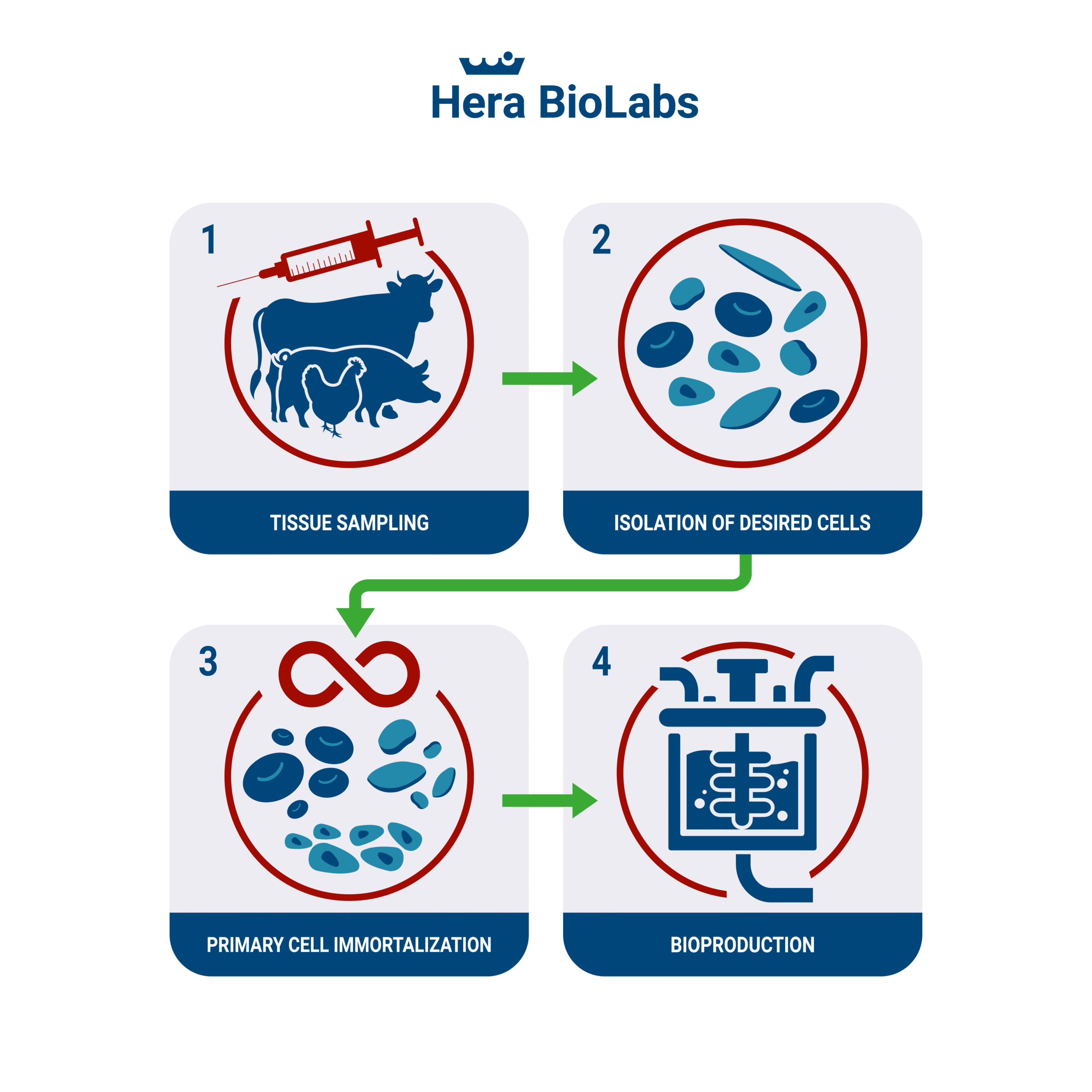
Artificial or cultured meat has been a topic of intense interest for the food industry, with the potential to offer a sustainable and ethically sound alternative to traditional animal farming. Now, a new advancement in this sector is setting the stage for potential scalability: the immortalization of cells for meat production. A recent paper titled “Immortalized Bovine Satellite Cells for Cultured Meat Applications” offers some important insights into how this technology could transform the way we produce meat.

immortalized cells for cultured meat applications

Cultured Meat and Immortalization: A Case Study

Cultured meat, also known as lab-grown meat, is developed by culturing animal cells in a controlled environment. Despite the promise of this technology, one of the major challenges is obtaining a consistent, large-scale source of animal cells that can grow indefinitely, overcoming the Hayflick limit – the natural limit to cellular division. To address this challenge, the paper proposes the idea of genetically immortalized cells. By introducing specific genes that extend a cell’s lifespan, a theoretically infinite supply of cells could be produced. This concept offers significant potential benefits, including rapid growth, bypassing cellular senescence (aging), and a consistent starting cell population for production.

In the study, researchers developed genetically immortalized bovine satellite cells (iBSCs) via constitutive expression of two key components: bovine Telomerase reverse transcriptase (TERT) and Cyclin-dependent kinase 4 (CDK4). Telomerase, an enzyme that lengthens telomeres—the protective ends of chromosomes—allows the cells to divide without experiencing age-related decline. Meanwhile, CDK4, a protein kinase, is crucial for cell cycle progression.

The result was impressive: the iBSCs achieved over 120 doublings at the time of publication and maintained their capacity for myogenic differentiation—meaning they could still differentiate into muscle cells, essential for creating the meat texture. The study’s results thus demonstrate the immense potential of immortalized cells for cultured meat production.

Implications for the Field

The creation of genetically immortalized bovine satellite cells presents an invaluable tool for cultured meat research and development. By providing a reliable and rapidly growing cell population, the technology could enable the mass production of cultured meat, addressing the critical scalability challenge. As biotech companies continue to innovate, the integration of immortalized cells into cultured meat production may not be far from realization. As we continue to refine our methods and improve our understanding of cell biology and genetic engineering, the dream of sustainable, ethical, and scalable meat production comes closer to reality.

PiggyBac for Immortalization

The piggyBac transposon technology is a highly effective approach for cell immortalization, particularly valued for its, efficiency and stability. As a non-viral technology, it also bears significant implications for regulatory approval, offering potential advantages in navigating complex processes like FDA approval.

Here are some key reasons for choosing piggyBac transposon technology in the process of immortalizing cells:

  1. Non-Viral Delivery System: PiggyBac transposon is a non-viral method of DNA insertion, which presents a notable advantage when considering regulatory aspects. Viral gene delivery methods can sometimes raise safety concerns due to their potential for mutagenesis and immunogenicity. On the contrary, piggyBac, as a non-viral technology, is less likely to trigger these concerns, which can streamline the process of securing regulatory approval, such as from the FDA.
  2. High Carrying Capacity: PiggyBac transposons can carry large genetic elements, enabling the insertion of multiple genes or extensive genetic components. This is crucial when multiple genes are required for cell immortalization. The piggyBac cargo capacity extends beyond 25 kb in size.
  3. Stable Gene Expression: Genes introduced using piggyBac transposition maintain stable expression in the cell. This stability is vital for cell immortalization, where continuous expression of specific genes is necessary.

The piggyBac transposon technology offers an easy non-viral solution for gene transfer and cell immortalization. Contact Hera if you are interested in using piggyBac for cell line engineering or immortalization products.

[/fusion_text][/fusion_builder_column][/fusion_builder_row][/fusion_builder_container]

How the piggyBac® Transposon Sheds Light on Breast Cancer Drug Resistance

With over 2.2 million annual cases, breast cancer is the most common cancer in women, but drug resistance remains a formidable challenge, particularly due to the development of drug resistance in recurrent or metastatic cases.1 The activation of the phosphatidylinositol 3-kinase (PI3K) pathway, driven by mutations in the PIK3CA gene, is a common oncogenic driver and plays a pivotal role in breast cancer development.2

Alpelisib, a PI3Kα-selective inhibitor, has shown promise in treating patients with PIK3CA-mutated breast cancer. However, studies have shown that certain mutations confer resistance to alpelisib, including upregulated retinoblastoma protein (Rb) and loss of phosphatase and tensin homologue protein (PTEN).3

Crucial Role of the piggyBac Transposon

In this context, a new study has harnessed the power of the piggyBac transposon system to unravel these key resistance mechanisms and propose a novel therapeutic strategy.

Auf der Maur and colleagues performed a genome-wide transposon-mediated mutagenesis screen using a mouse model of PIK3CAH1047R-driven mammary tumors.4 To do this, the team combined the piggyBac (PB) transposon system5 with a murine whey-acidic protein (WAP)-driven and PIK3CAH1047R mutant mammary tumor model.6

The piggyBac system allowed for the identification of NF1 loss, a negative regulator of RAS, as a resistance mechanism against PI3Kα inhibitors. The study further elucidated the metabolic changes associated with NF1 loss, revealing enhanced glycolysis and lower levels of reactive oxygen species (ROS) in cancer cells.

Figure 1. Illustration of the transgenic mouse lines used for the in vivo transposon mediated resistance screen.

By leveraging the piggyBac transposon system, this study has shed light on the mechanisms underlying resistance to PI3Kα inhibitors in breast cancer. The identification of NF1 loss as a resistance mechanism opens new avenues for more effective therapeutic strategies. As such, the group observed synergistic anti-tumor effects when NF1 knockout cells were treated with N-acetylcysteine (NAC) along with a PI3Kα inhibitor.

These findings also highlight the importance of utilizing innovative genetic tools like piggyBac to unravel resistance mechanisms and propel advancements in breast cancer treatment. This research offers hope for improved treatment strategies and underscores the power of the piggyBac system in advancing our understanding of drug resistance in breast cancer.

Learn More About piggyBac

The piggyBac system offers a versatile and efficient approach for genome editing, with applications across diverse research fields. Its remarkable cargo capacity of over 200kb sets it apart from other transposon and viral delivery vehicles, and makes it the ideal choice for creating stable cell lines.

To learn more about piggyBac and how Hera can help accelerate your gene editing research with our toolkit, click here.

References
  1. Sung H., Ferlay J., Siegel R.L., Laversanne M., Soerjomataram I., Jemal A., Bray F. Global cancer statistics 2020: GLOBOCAN estimates of Incidence and mortality worldwide for 36 cancers in 185 countries. CA. Cancer J. Clin. 2021; 71: 209-249. https://doi.org/10.3322/caac.21660
  2. Miller T.W., Rexer B.N., Garrett J.T., Arteaga C.L. Mutations in the phosphatidylinositol 3-kinase pathway: role in tumor progression and therapeutic implications in breast cancer. Breast Cancer Res. 2011; 13: 224 https://doi.org/10.1186/bcr3039
  3. André F., Ciruelos E., Rubovszky G., Campone M., Loibl S., Rugo H.S., Iwata H., Conte P., Mayer I.A., Kaufman B. et al. Alpelisib for PIK3CA -mutated, hormone receptor–positive advanced breast cancer. N. Engl. J. Med. 2019; 380: 1929-1940 https://doi.org/10.1056/nejmoa1813904
  4. Auf der Maur, P., et al. (Year). N-acetylcysteine overcomes NF1 loss-driven resistance to PI3Kα inhibition in breast cancer. Cell Reports Medicine, 4(4), 101002.
  5. Rad R., Rad L., Wang W., Cadinanos J., Vassiliou G., Rice S., Campos L.S., Yusa K., Banerjee R., Li M.A. et al. PiggyBac transposon mutagenesis: a tool for cancer gene discovery in mice. Science. 2010; 330: 1104-110 https://doi.org/10.1126/science.1193004
  6. Meyer D.S., Brinkhaus H., Müller U., Müller M., Cardiff R.D., Bentires-Alj M. Luminal expression of PIK3CA mutant H1047R in the mammary gland induces heterogeneous tumors. Cancer Res. 2011; 71: 4344-4351 https://doi.org/10.1158/0008-5472.CAN-10-3827

Advantages of Utilizing the SRG rat for Investigating Tumor Metastasis

[fusion_builder_container type=”flex” hundred_percent=”no” equal_height_columns=”no” hide_on_mobile=”small-visibility,medium-visibility,large-visibility” background_position=”center center” background_repeat=”no-repeat” fade=”no” background_parallax=”none” parallax_speed=”0.3″ video_aspect_ratio=”16:9″ video_loop=”yes” video_mute=”yes” border_style=”solid”][fusion_builder_row][fusion_builder_column type=”1_1″ layout=”1_1″ background_position=”left top” border_style=”solid” border_position=”all” spacing=”yes” background_repeat=”no-repeat” margin_top=”0px” margin_bottom=”0px” animation_speed=”0.3″ animation_direction=”left” hide_on_mobile=”small-visibility,medium-visibility,large-visibility” center_content=”no” last=”true” hover_type=”none” border_sizes_top=”” border_sizes_bottom=”” border_sizes_left=”” border_sizes_right=”” min_height=”” link=”” background_blend_mode=”overlay” first=”true”][fusion_text columns=”” column_min_width=”” column_spacing=”” rule_style=”” rule_size=”” rule_color=”” hue=”” saturation=”” lightness=”” alpha=”” user_select=”” awb-switch-editor-focus=”” content_alignment_medium=”” content_alignment_small=”” content_alignment=”” hide_on_mobile=”small-visibility,medium-visibility,large-visibility” sticky_display=”normal,sticky” class=”” id=”” width_medium=”” width_small=”” width=”” min_width_medium=”” min_width_small=”” min_width=”” max_width_medium=”” max_width_small=”” max_width=”” margin_top=”” margin_right=”” margin_bottom=”” margin_left=”” fusion_font_family_text_font=”” fusion_font_variant_text_font=”” font_size=”” line_height=”” letter_spacing=”” text_transform=”none” text_color=”” animation_type=”” animation_direction=”left” animation_color=”” animation_speed=”0.3″ animation_delay=”0″ animation_offset=”” logics=””]

The dissemination of tumor cells into systemic circulation is a critical area of cancer research, but it presents significant challenges. One obstacle is the lack of appropriate animal models that can support larger tumors and enable frequent, large volume blood collection. In this article, we explore the innovative research conducted by Ami Yamamoto and colleagues in Kevin Cheung’s lab at Fred Hutchinson Cancer Center.

Challenges with in vivo modeling of breast cancer dissemination

Aggressive cancers frequently exhibit necrotic tumor interiors, which is associated with poor clinical prognosis and the development of metastasis. [2-6] Despite this association, the precise mechanisms by which the necrotic core promotes metastasis are not fully understood. In this study, the research team employed SRG rats as a model organism to improve the detection of dissemination events and study molecular mechanisms that mediate the relationship between tumor necrosis and metastasis. [1]

Supplemental Figure S1: Orthotopic transplantation into rats produce 3x larger tumors, 10x more CTCs, and 4x more lung metastases than into mice.

Breakdown of Figure S1:

  • S1A) Experimental schema. 4T1 mouse mammary tumor cells labeled with membrane GFP (4T1-GFP) were orthotopically transplanted into a single #4 mammary fat pad of SRG rats (n=6) or NSG mice (n=24). Animals were sacrificed at 24 days post-transplantation.
  • S1B-C) Final tumor weight and estimated final tumor volume per animal.
  • S1D) Blood volume collected per animal.
  • S1E) Representative micrographs of single CTCs and CTCs clusters from 4T1-GFP transplanted SRG rats. GFP denoted in green. DAPI in blue.
  • S1F-G) Single CTC and CTC cluster abundance per animal. Individual blood samples from 8 mice were pooled into one tube for a total of n=3 samples. Events per individual animal are reported.
  • S1H) Percentage of CTC events that were single CTCs or CTC clusters. Mean ± SD.
  • S1I) Representative stereomicroscope images of lung metastases from NSG mice and SRG rats.
  • S1J) The number of lung metastases determined by stereomicroscopy in transplanted SRG rats and NSG mice.
  • Mean values shown on graphs. All P-values determined by Welch’s t-test.

Yamamoto et al. began by comparing tumor growth and metastasis in SRG rats versus NSG mice. They implanted the same volume of luciferase-tagged 4T1 mouse mammary carcinoma cells (4T1-Luc) into the mammary tissue of SRG rats or NSG mice. After 24 days of growth, as tumors approached the maximum allowable size for mice, tumors were removed and characterized. Rat tumor mass and volume was three-fold higher than mouse (Figure 1A-C). Additionally, the team was able to collect ten-fold more blood from rats versus mice, leading to a proportional ten-fold increase in the recovery of both single circulating tumor cells (CTCs) and CTC clusters (Figure 1D, F, & G). The ratio of CTC clusters to single CTCs did not differ between rats and mice, nor did their morphological appearance (Figure 1E & H). In keeping with higher numbers of CTCs, rats exhibited more lung metastases than mice, assessed using stereomicroscopy for GFP (Figure 1I & J). The authors concluded that, because the same number of 4T1 cells was transplanted in both SRG rats and NSG mice and because tumors were harvested at the same time, our direct comparison showed that the rat transplantation model increases the efficiency of detecting rare tumor dissemination events by 10-fold.

Having established the utility of the SRG rat, the authors proceeded to show that the development of necrosis is temporally related to dissemination of CTCs, in both rats and humans. Importantly, they report that dissemination occurs in the dilated blood vessels surrounding the necrotic tumor core, and that dissemination events are dependent on ANGPTL7 that is produced by tumor cells bordering the necrotic region. The authors suggest that ANGPTL7 could be a viable pharmacological target for the inhibition of metastatic events.

Benefits of the SRG rat model in CTC research

These findings make the SRG rat a promising model for studying CTC dissemination, and these results provide valuable insights into the molecular mechanisms underlying tumor dissemination and pave the way for the development of new therapies for breast cancer.

Figure 4: The SRG Rat lacks B, T, and NK cells.

Learn more about Hera’s SRG Rat Model

The SRG rat model has emerged as a promising tool for studying circulating tumor cells and metastasis, providing several advantages over traditional mouse models. Hera offers in vivo oncology studies utilizing the SRG rat in a wide variety of xenograft and PDX tumor models, allowing researchers to gain valuable insights into the molecular mechanisms underlying tumor dissemination.

Contact Charles River Labs for more information.

References:
  1. Yamamoto A, Huang Y, Krajina BA, et al. Metastasis from the tumor interior and necrotic core formation are regulated by breast cancer-derived angiopoietin-like 7. Proc Natl Acad Sci U S A. 2023;120(10):e2214888120. doi:10.1073/pnas.2214888120  
  2. Fisher, E. R., Sass, R., & Fisher, B. (1984). Pathologic findings from the National Surgical Adjuvant Project for Breast Cancers (protocol no. 4). X. Discriminants for tenth year treatment failure. Cancer, 53(3 Suppl), 712–723. https://doi.org/10.1002/1097-0142(19840201)53:3+<712::aid-cncr2820531320>3.0.co;2-i  
  3. Jimenez, R. E., Wallis, T., & Visscher, D. W. (2001). Centrally necrotizing carcinomas of the breast: a distinct histologic subtype with aggressive clinical behavior. The American journal of surgical pathology, 25(3), 331–337. https://doi.org/10.1097/00000478-200103000-00007 
  4. Leek, R. D., Landers, R. J., Harris, A. L., & Lewis, C. E. (1999). Necrosis correlates with high vascular density and focal macrophage infiltration in invasive carcinoma of the breast. British journal of cancer, 79(5-6), 991–995. https://doi.org/10.1038/sj.bjc.6690158 
  5. Bredholt, G., Mannelqvist, M., Stefansson, I. M., Birkeland, E., Bø, T. H., Øyan, A. M., Trovik, J., Kalland, K. H., Jonassen, I., Salvesen, H. B., Wik, E., & Akslen, L. A. (2015). Tumor necrosis is an important hallmark of aggressive endometrial cancer and associates with hypoxia, angiogenesis and inflammation responses. Oncotarget, 6(37), 39676–39691. https://doi.org/10.18632/oncotarget.5344
  6. Zhang, L., Zha, Z., Qu, W., Zhao, H., Yuan, J., Feng, Y., & Wu, B. (2018). Tumor necrosis as a prognostic variable for the clinical outcome in patients with renal cell carcinoma: a systematic review and meta-analysis. BMC cancer, 18(1), 870. https://doi.org/10.1186/s12885-018-4773-z

[/fusion_text][/fusion_builder_column][/fusion_builder_row][/fusion_builder_container]

Addressing the limitations of chemotherapeutic drug delivery with engineered protein polymers

[fusion_builder_container type=”flex” hundred_percent=”no” equal_height_columns=”no” hide_on_mobile=”small-visibility,medium-visibility,large-visibility” background_position=”center center” background_repeat=”no-repeat” fade=”no” background_parallax=”none” parallax_speed=”0.3″ video_aspect_ratio=”16:9″ video_loop=”yes” video_mute=”yes” border_style=”solid”][fusion_builder_row][fusion_builder_column type=”1_1″ type=”1_1″ background_position=”left top” border_style=”solid” border_position=”all” spacing=”yes” background_repeat=”no-repeat” margin_top=”0px” margin_bottom=”0px” animation_speed=”0.3″ animation_direction=”left” hide_on_mobile=”small-visibility,medium-visibility,large-visibility” center_content=”no” last=”no” hover_type=”none” border_sizes_top=”” border_sizes_bottom=”” border_sizes_left=”” border_sizes_right=”” min_height=”” link=””][fusion_text]

The standard care of treatment for many types of cancer and infectious diseases around the world is currently chemotherapy. However, chemotherapies are widely known to be linked to severe toxicity and resistance that develop mostly due to non-specificity, leading to overall disease progression.

Figure 1b. Chemotherapeutics have poor specificity which results in higher doses of medication due to the lack of bioavailability. Higher doses result in increased toxicity to healthy cells, drug resistance, and various other side effects pictured here.

To combat these limitations, recent advancements in recombinant technologies have created some novel genetically engineered protein polymers such as Elastin-like polypeptide (ELP), Silk-like polypeptide (SLP), and hybrid protein polymers with specific sequences to impart consistent and precise features to target proteins, and which have given excellent preclinical results in studies so far.

The synthesis and administration of chemotherapeutics have thus made use of these protein polymers, overcoming many of the limitations of traditional therapeutics.

The research team responsible for a recent publication, summarizes the development of such advanced recombinant protein polymers, and discusses the main challenges associated with designing targeted delivery systems for chemotherapeutics, as well as the potential for unique gene editing platforms like Hera’s Cas-CLOVER to further enhance their applications in the future.

Challenges in traditional chemotherapeutics processing with recombinant protein polymers

Recombinant protein polymer research has grown significantly in popularity over the past few decades mainly because it has addressed a number of problems with traditional drug delivery systems. Many of these new polymers were discovered to be highly effective at delivering therapeutic payload, and some of them have even received FDA approval.

Natural protein polymers are utilized in forms such as nanoparticles, micelles, scaffolds, and hydrogels as the vehicles for targeted drug delivery to tissues.

See Figure 3:

a) Micelles
b) Hydrogel
c) Micelle containing targeting moiety and chemotherapeutics
d) Bi-functional micelle chemotherapeutics formulation
f) Modified liposomes with chemotherapeutics
g) Hybrid hydrogel synthesized by recombinant protein polymers and other protein polymers, like collagen, encapsulating chemotherapeutics.

Figure 3. Recombinant protein polymer-based drug delivery platforms are formulated into various types of nanoplatforms and are formulated to chemotherapeutics.

Nevertheless, despite their effectiveness, there are a number of significant issues with these current systems that must be resolved.
Natural protein polymers are currently widely available, manageable, and affordable for use in a variety of biological applications, but they still have some drawbacks. For example, batch-to-batch deviations in raw materials can render the final products being prone to efficacy variance. Additionally, the molecular weight of the protein polymers limits their usage to only a few dozen applications at this time.

Figure 1a. The molecular weight distribution and solubility of chemotherapeutics shows that most drugs have lower molecular weight and increased hydrophobicity.

The future of recombinant protein polymers and targeted drug delivery systems

In response to these and other problems, genetic engineering has been used to develop recombinant protein polymers. These new polymers are synthesized using identical sequences and scaled up for large-scale production, thus resulting in protein polymers without as much batch-to-batch variance as before.

Figure 2. A representation of recombinant protein polymer synthesis and its formulation with chemotherapeutics. The recombinant protein is isolated, purified, and combined with chemotherapeutics to form recombinant protein-chemotherapeutics formulation.

This technology offers new strategies for controlling molecular weight and the overall structure of the target protein. Additionally, other targeting sequences can be further fused with the protein for advanced drug delivery applications in the near future. The team in this study mentioned Cas-CLOVER as a great example for this application, as it has the potential to revolutionize the world of therapeutic bioprocessing by making precise, intentional and beneficial edits in the platform bioprocessing cell lines resulting in efficient and effective developmental control.

Accelerate your protein polymer formulations and bioprocessing projects with Hera’s Cas-CLOVER technology

Cas-CLOVER is a highly specific system demonstrating 99%+ efficiency, and it’s covered by issued patents with clear commercial access. To learn more about Cas-CLOVER, and how Hera can help accelerate your cell line development studies, click here. We have everything for your research needs, including flexible licensing options.

References:
  1. Anjali Phour, Vidit Gaur, Ahana Banerjee, Jayanta Bhattacharyya. Recombinant protein polymers as carriers of chemotherapeutic agents. Advanced Drug Delivery Reviews, Volume 190 (2022), https://doi.org/10.1016/j.addr.2022.114544.

[/fusion_text][/fusion_builder_column][/fusion_builder_row][/fusion_builder_container]

Cas-CLOVER achieves targeted knock-ins in induced pluripotent stem cell lines

As cell line development bioprocessing turns from traditional random plasmid integration to targeted knock-ins for maximizing yield and stability, it is important to choose the right gene editing tools. The RNA-guided Cas9 nuclease from Streptococcus pyogenes (SpCas9), which is the most commonly used enzyme in genome-editing applications, can yield significant levels of off-target activity, with reported off-target cutting as high as 13%. Multiplex editing with SpCas9 for cell line engineering can also lead to high rates of translocations, up to 4% for individual translocations or rearrangements and up to 5% cumulatively.1

A recent study published in Molecular Therapy Nucleic Acids saw the authors at Poseida Therapeutics deploy the dual RNA-guided dimeric endonuclease Cas-CLOVER, as an alternative to CRISPR/Cas9. Hera and Poseida both use Cas-CLOVER technology in different fields of use. Let’s take a closer look at the targeted knock-in data in this study with Cas-CLOVER.

Comparison of knockout and knock-in success in iPSCs between Cas-CLOVER and Cas9

In this study, the team determined HDR (homology-directed repair)-mediated knock-in potential using Cas-CLOVER by examining reporter cassette delivery at several loci (GAPDH, B2M, and HBB) in induced Pluripotent Stem Cells (iPSCs).

Figure 1: Schematic showing targeting strategy.

1 Cas-CLOVER is a novel high-fidelity nuclease for safe and robust generation of TSCM-enriched allogeneic CAR-T cells. Madison et al.Molecular Therapy – Nucleic Acids. August 8, 2022.

At most loci, Cas-CLOVER’s indel – as well as knock-in – efficiency is equal to or greater than that of Cas9, as demonstrated in the below example for B2M.

Figure 2: Quantification of indel (left) and HDR rates (right) at the B2M locus.

At HBB, knockin efficiency was higher using Cas-CLOVER, but the difference was probably not due to differential efficiency of target cleavage, as gauged by Cas-CLOVER’s lower indel generation (see image below). Rather, the higher efficiency was likely a result of the larger deletions, with overhangs, that are characteristic of Cas-CLOVER. Cas9 indels generally result in small 1-3 bp blunt-ended cuts.

Figure 2: Quantification of indel (left) and HDR rates (right) at the HBB locus. Flow for HDR measurement at the HBB locus was performed 14 days post-nucleofection to ensure episomal GFP expression from the donor plasmid had decreased below the detection limit.

After Cas-CLOVER editing, potential off-target sites were queried for the presence of indel mutations. Indel frequency at off-target sites did not occur at a statistically significant level above background. The team concluded that, within primary T cells from multiple donors, the Cas-CLOVER platform performs as well as any other targeted nuclease, but with much lower off-target activity. Notably, Cas-CLOVER yields efficient multiplexed gene editing.

Targeted knock-in capability is becoming essential for cell line development

Induced pluripotent stem cells (iPSCs) are being used more and more in therapeutic bioprocessing and in synthetic biology. Moreover, the level of targeting that the Poseida team was able to achieve with Cas-CLOVER is relevant for any cell line development professional – including those engineering custom cells for preclinical research purposes.

Learn more about Hera’s Cas-CLOVER and piggyBac technology

To learn more about Cas-CLOVER, piggyBac, and how Hera can help accelerate your gene editing research with our toolkit, click here. We have everything for your gene editing needs, including flexible front or back-loaded service terms and licensing options. Access our technology as quickly as possible by shopping online today.

References

  1. Cas-CLOVER is a novel high-fidelity nuclease for safe and robust generation of TSCM-enriched allogeneic CAR-T cells. Madison et al.Molecular Therapy – Nucleic Acids. August 8, 2022.

piggyBac Case Study: Generating Full-length NKR-P1 Transfectants

The high efficiency and stability of piggyBac integration have been proven in a variety of recent studies. With a large cargo capacity of over 200kb, piggyBac surpasses many other delivery technologies, making it the optimal choice for stable cell line creation. Hundreds of peer-reviewed papers have been published as a result of the piggyBac platform.

In one published study, full-length NKR-P1 transfectants were generated using the piggyBac system. Let’s take a closer look at the critical role that piggyBac played in helping the research team build a comprehensive model of NKR-P1-LLT1 interactions to better understand how they function in immune-related diseases and cancer.

Human NKR-P1:LLT1 complex reveals clustering in the immune synapse

Innate immune lymphocytes known as natural killer (NK) cells have a variety of activating and inhibiting surface receptors, allowing them to recognize and kill malignant and infected cells. One of these is NKR-P1, which acts as an inhibitory receptor. Additionally, NK cells support the body’s adaptive immune response and even preserve a type of immunological memory, further highlighting the vital functions of these cells in immunity.

LLT1, a ligand of NKR-P1, is usually expressed on monocytes and B cells and helps maintain NK cell self-tolerance. However, it is also upregulated in many cancers, allowing those cancer cells to evade the immune system by binding to NKR-P1, which inhibits the NK cells.

Figure 1: Depiction of the hypothetical arrangement of NKR-P1 dimers (cyan and blue) interacting with LLT1 dimers (green and yellow). Bláha et al., 2022.

LLT1 ligation induces NKR-P1 receptor clustering

In this study, full-length NKR-P1 transfectants were generated using the piggyBac system, and induced to express the receptor in a limited density to allow single-molecule localization microscopy. Unlike other gene editing platforms, piggyBac allows you to integrate large or small transgenes seamlessly. Demonstrated to work efficiently beyond 250kb+ in size, Hera regularly creates vectors between 10kb and 25 kb including multi-component ion channels and GPCRs in a single construct.

Super-resolution dSTORM microscopy shines with piggyBac

For the single-molecule localization microscopy, full-length NKR-P1 stable transfectants were generated in HEK293S GnTI– cell line using the piggyBac transposon-based system with doxycycline-inducible protein expression. It’s important to note that long-term stability is essential for producing consistent and reproducible results like this, and the piggyBac transposon genomic integrations are extremely stable for months of continuous culture and >50 passages.

Figure 2: piggyBac’s high carrying capacity allowed for the creation of full-length NKR-P1 stable transfectants in the HEK293S GnTI– cell line.

Successful Results using piggyBac Technology

The research team’s findings clarify the mode of signal transduction of the human NKR-P1 receptor within the NK cell immune synapse and how this receptor overcomes its low affinity for LLT1 by ligand binding-induced cross-linking and clustering, serving as a useful model for the future description of related homologous low-affinity complexes. By observing the clusters using SEC-SAXS analysis, dSTORM super-resolution microscopy, and freshly isolated NK cells, with the help of piggyBac technology, the team concluded that only the ligation of both LLT1 binding interfaces leads to effective NKR-P1 inhibitory signaling.

piggyBac Patented Technology for your Industry

The piggyBac Transposase/Transposon DNA Delivery System is a non-viral gene editing platform designed for stable integration and expression across a variety of industries and research. Hera BioLabs is the exclusive licensee and sublicensor of this patented technology for drug discovery and early development research including creating custom cell lines for R&D, therapeutic bioprocessing, animal model embryo engineering, and more.

Reach out to us to learn more about the piggyBac technology, the services we offer, and available licenses for your industry.

References

Bláha, J., Skálová, T., Kalousková, B. et al. Structure of the human NK cell NKR-P1:LLT1 receptor:ligand complex reveals clustering in the immune synapse. Nat Commun 13, 5022 (2022). https://doi.org/10.1038/s41467-022-32577-6

Evolution Of The Rat Model

Rats have been favored for drug development studies because the metabolism and pharmacokinetic properties of drugs in rats are most similar to humans. Rats are also preferable for xenograft studies because they allow for tumor volumes 10-fold higher than in mice, they are easier to surgically manipulate, and they can accommodate multiple blood samplings to assess the pharmacokinetic properties of a drug. To successfully generate cancer xenografts from humans in rats, the animal must be immunodeficient to prevent rejection of the xenograft by the animal’s immune system.

The first generation of immunodeficient rats is the nude rat. Nude rats are characterized as being devoid of T-cells, but still retaining functional B- and NK-cells. The nude rat accepts human xenografts, but studies have shown that nude rats have increased incidences of tumor regression likely related to age-dependent changes in immunocompetence 1-2.

The answer to some of these deficiencies was the development of severe combined immunodeficiency (SCID) rats. SCID rats are Prkdc deficient which means the rat has no B- or T-cells. SCID rats demonstrate severe immunodeficiencies without the “leaky” phenotype that is observed in SCID mice – where detectable levels of Ig are generated by a few clones of functional B-cells3. SCID rats also demonstrate growth retardation and exhibit premature senescence. SCID rats host xenografts successfully, but only survive for around a year if kept under very strict pathogen-free conditions.

In order to overcome the limitations of the SCID rat, Hera Biolabs developed the Sprague-Dawley Rag2 null (SDR) rat. SDR rats are generated on a Sprague-Dawley background – an albino, outbred lab rat that is preferred for metabolism and toxicity studies. Sprague-Dawley rats are also preferred for their calm demeanor, ease of handling, and larger size than Wistar rats. The SDR rat is null for the Rag2 gene which results in a lack of B-cells and a severely reduced T-cell population4. These rats are highly permissible to xenografts and xenografts demonstrate greater uniformity in growth profiles. SDR rats have also been shown to successfully host large, rapidly developing xenografts of human cancer cell lines (e.g. H358, VCaP) that are difficult or impossible to generate in NSG mouse models. The SDR rat maintains a population of NK-cells which makes this model unlikely to accept xenografts of all tumor types.

The researchers at Hera Biolabs noted that a limitation of the SDR model is the large population of NK-cells that is maintained. To overcome this limitation, an evolution on the SDR rat has been developed at Hera biolabs that contains an additional Il2gamma null, known as the OncoRat®-SRG™. The OncoRat is completely depleted of B-cells, T-cells, and NK-cells. The OncoRat boasts an engraftment take rate of 90%+ using non-small cell lung cancer (NSCLC) patient derived xenograft model establishment as the example.

Hera - Blog - Evolution of the rat model - Figure 1

References

  1. Colston, M. J.; Fieldsteel, A. H.; Dawson, P. J., Growth and regression of human tumor cell lines in congenitally athymic (rnu/rnu) rats. Journal of the National Cancer Institute 1981, 66 (5), 843-8.
  2. Maruo, K.; Ueyama, Y.; Kuwahara, Y.; Hioki, K.; Saito, M.; Nomura, T.; Tamaoki, N., Human tumour xenografts in athymic rats and their age dependence. British Journal of Cancer 1982, 45 (5), 786-789.
  3. Mashimo, T.; Takizawa, A.; Kobayashi, J.; Kunihiro, Y.; Yoshimi, K.; Ishida, S.; Tanabe, K.; Yanagi, A.; Tachibana, A.; Hirose, J.; Yomoda, J.-i.; Morimoto, S.; Kuramoto, T.; Voigt, B.; Watanabe, T.; Hiai, H.; Tateno, C.; Komatsu, K.; Serikawa, T., Generation and Characterization of Severe Combined Immunodeficiency Rats. Cell Reports 2012, 2 (3), 685-694.
  4. Noto, F. K.; Adjan Steffey, V.; Tong, M.; Ravichandran, K.; Zhang, W.; Arey, A.; McClain, C. B.; Ostertag, E.; Mazhar, S.; Sangodkar, J.; Difeo, A.; Crawford, J.; Narla, G.; Jamling, T. Y., Sprague Dawley Rag2 null rats created from engineered spermatogonial stem cells are immunodeficient and permissive to human xenografts. Mol Cancer Ther 2018.

Syngeneic Orthotopic Brain Cancer Xenografts In Rats

C6, 9L, and F98 are the three of the most used rat glioma models in research. In their recent review article, Sahu et al. describe the origin, genomics, and use of these three models in research1. To this day, gliomas remain incredibly hard to treat and patients commonly have very low survival rates. Orthotopic rat brain cancer models are central to generating better clinical interventions. Leveraging our expertise in genetically engineered cell-lines, rat surgeries, and in vivo bioluminescent imaging capabilities, Hera BioLabs is expanding our orthotopic brain offerings in rats.

Some of the advantages of rat versus mouse brain tumor models are as follows:

  • A larger brain allows more precise stereotactic implantation and a longer time until tumor endpoint
  • The larger tumor size creates better in vivo imaging
  • Therapeutic agents can be given intracerebrally (i.c.) with greater ease
  • More literature and research exist on rat brain tumors compared to their mouse counterparts

Hera BioLabs’s SRG Rat™

We offer another significant advantage – a highly immunocompromised rat model, the SRG. Lack of a complete immune system can counteract the inability to generate orthotopic data as two of these most widely used glioma models, C6 and 9L are highly immunogenic in many rat strains. If an intact immune system is not required, the SRG rat facilitates studies using immunogenic cell lines.

The C6 cell line is the most used rodent brain tumor model and expresses genes resembling those reported in human gliomas. Several of these genes are responsible for stimulation of the Ras pathway. C6 is widely used to evaluate therapeutic efficacy in vitro, yet it is immunogenic even in its host Wistar rat and currently has no host it can be successfully propagated in.

9L is the second most commonly used rat brain tumor model. 9L is a gliosarcoma derived from Fischer rats and develops rapidly growing tumors when implanted i.c. This cell line is primarily used to study drug transport in the brain and tumor blood barriers, drug resistance, modeling brainstem tumors, and MRI, PET, and PK studies. Similar to C6, 9L can provoke a strong antitumorigenic immune response.

F98 glioma is the third most common rat brain tumor model. Genes that are overexpressed in F98 include Ras, PDGFβ, cyclin D1/D2, EGFR, and Rb. This model simulates human GBMs closer than other cell lines due to its high invasiveness and weak immunogenicity, making it an ideal candidate for studying efficacy of therapeutic agents. F98 also has several gene-modified versions including F98-EGFR, F98npEGFRvlll, and a luciferase expressing line which allows for in-vivo imaging.


Hera BioLabs - Blog - Hera BioLabs Is Expanding Our Orthotopic Brain Offerings In Rats-Table 1 Image

Table 1: Comparison of C6, 9L, and F98 significant molecular markers.


Hera BioLabs - Blog - Hera BioLabs Is Expanding Our Orthotopic Brain Offerings In Rats-Figure 1 Image

Figure 1: Histopathological view of the C6, 9L, and F98 rat brain tumors. A. C6 glioma is composed of pleomorphic cells ranging from round to oblong nuclei with a mild herring pattern of growth and focal invasion of contiguous normal brain. B. 9L gliosarcoma is composed of spindle-shaped cells with a sarcomatoid appearance. A whorled pattern of growth is seen, with little invasion of contiguous normal brain. C. F98 glioma is composed of a mixed population of spindle-shaped cells with fusiform nuclei, a frequent whorled pattern of growth is seen with a smaller subpopulation of polygonal cells with round to oval nuclei. Extensive invasion of the contiguous brain occurs with islands of tumor cells and a central area of necrosis.


Work With Hera BioLabs

Reach out to us to learn more about using our SRG Rat for your research.

References

  1.  Sahu, U., Barth, R. F., Otani, Y., McCormack, R. & Kaur, B. Rat and Mouse Brain Tumor Models for Experimental Neuro-Oncology Research. J Neuropathol Exp Neurol 81, 312-329, doi:10.1093/jnen/nlac021 (2022).

Acute Myeloid Leukemia MOLM13 And Optimus

The American Cancer Society estimates that approximately 60,650 new leukemia cases and 24,000 leukemia deaths will occur in 2022. Of these, acute myeloid leukemia (AML) will account for around 20,050 new cases and 11,540 deaths. Almost all will be in adults, with increased risk associated with age and male sex1. AML, the most common leukemia in adults, involves uncontrolled proliferation of myeloid stem or progenitor cells in hematopoietic tissue. These aberrant myeloid cells accumulate in the bone marrow, leading to decreased hematopoiesis, thrombocytopenia and anemia2.

Left untreated, AML progresses rapidly to death. Thus, it is imperative that pharmacological interventions work rapidly. Due to this constraint, it is believed that AML patients have often received higher than needed drug doses. Recently, the US FDA released Project Optimus, a set of guidelines aimed at refining dose optimization in the clinical setting3. The guideline has already impacted clinical pipelines for AML therapy; Kura has announced a dose-optimization trial for their AML drug KO-539 and Amgen will soon do the to do the same with their KRAS inhibitor Lumakras4.

Hera BioLabs - Blog - Acute Myeloid Leukemia MOLM13 and Optimus - Figure 1 Image

Figure 1. Bracketing Studies use more dose level groups in order to provide more information about the relationships between efficacy, safety, toxicity, and dose.

The FDA also recommends that drug developers consider Project Optimus when designing pre-clinical studies. The FDA would like to see more dose levels tested in animals, with an emphasis on assessing tumor drug exposure and performing bracketing analyses to determine optimal dosing (Figure 1).

The SRG OncoRat offers numerous advantages for performing pre-clinical AML studies in keeping with Project Optimus recommendations. Due to its larger size, the SRG rat allows for multiple types of data to be obtained from the same animals within efficacy studies, including:

  • Serial blood draws for Pharmacokinetics & pharmacodynamics
  • Serial tumor biopsies for tracking tumor drug exposure over time
  • Better take rate with difficult tumor models, such as AML
  • Lower variance in tumor growth kinetics, allowing for fewer animals and more doses

We have recently developed a solid tumor AML model in the SRG rat, allowing for maximum use of each animal. The MOLM-13 cell line was established from the blood of a young Japanese man with relapsing acute myeloid leukemia that progressed from myelodysplastic syndrome. These cells express monocyte-specific esterase, MLL-AF9 fusion mRNA, trisomy 8, as well as other trisomies that are present in various subclones5. MOLM-13 tumors exhibit rapid growth, and they are responsive to Sponsor test articles.

Hera BioLabs - Blog - Acute Myeloid Leukemia MOLM13 and Optimus - Figure 2 Image

Figure 2. MOLM-13 tumor growth. SRG rats were inoculated subcutaneously with 75,000 MOLM-13 cells and tumor growth was monitored with electronic calipers. N = 9.

The SRG OncoRat is a powerful tool for in vivo oncology studies, as it outperforms mouse models for compliance with the goals of Project Optimus. SRG rats are extremely well-suited for hosting solid AML tumors for analyses, including drug efficacy, tumor growth kinetics, and PK/PD studies. Tumor volumes are far larger than those obtained in mice, allowing for serial tumor biopsies to assess drug exposure.

If your preclinical studies could use a boost, or you would like to see more data on the SRG Rat, contact Hera BioLabs for more information here.

References

  1. Cancer Facts & Figures 2022, https://www.cancer.org/cancer/acute-myeloid-leukemia/about/key-statistics.html#references (2022).
  2. Almosailleakh, M. & Schwaller, J. Murine Models of Acute Myeloid Leukaemia. Int J Mol Sci 20, doi:10.3390/ijms20020453 (2019).
  3. Project Optimus: Reforming the dose optimization and dose selection paradigm in oncology, https://www.fda.gov/about-fda/oncology-center-excellence/project-optimus (2022).
  4. Armstrong, A. FDA’s renewed focus on oncology dosing spooks investors, but companies say they’re ready, https://www.fiercebiotech.com/biotech/fda-s-renewed-focus-oncology-dosing-spooks-investors-but-companies-say-they-were-ready (2021).
  5. Matsuo, Y. et al. Two acute monocytic leukemia (AML-M5a) cell lines (MOLM-13 and MOLM-14) with interclonal phenotypic heterogeneity showing MLL-AF9 fusion resulting from an occult chromosome insertion, ins(11;9)(q23;p22p23). Leukemia 11, 1469-1477, doi:10.1038/sj.leu.2400768 (1997).

Rapid Creation of Bioluminescent Cell Lines for Orthotopic and Metastatic Rodent Oncology Studies

The piggyBac (PB) transposon system delivers highly stable transgenes without gene silencing for over 40 passages, making PB superior to viral methods for creating reporter cell lines. The PB transposon is a mobile genetic element that is integrated into the host genome via the PB transposase “cut and paste” mechanism. To achieve stable genomic integration, The PB transposon is co-transfected with a PB transposase protein or expression vector. The transposase inserts the gene cargo and ITRs into the host genome at TTAA sites (Figure 1).

how-piggybac-works

Figure 1: The piggyBac transposon system

Advantages to piggyBac in Bioluminescent Cell Line Creation

Hera BioLabs has used PB to generate numerous tumorigenic cell lines with robust luciferase expression. With previously validated cell lines, it takes Hera as few as 4 weeks to generate stable luciferase(+) cells for downstream use. These cell lines serve as an invaluable resource for monitoring tumor xenograft growth in either subcutaneous or orthotopic anatomical locations. In the subcutaneous space, in vivo luminescent imaging allows for assessment of primary tumor growth using the AMI HT from Spectral Imaging Instruments Imaging. For example, Hera recently made H358 non-small cell lung cancer cells with stable luciferase expression for subcutaneous inoculation in our SRG OncoRats and tracked tumor growth with luminescent imaging (Figure 2). Importantly, high luciferase expression confers adequate luminescent intensity for visualization of deep orthotopic tumors and metastases.

bioluminescent-rats

Figure 2: In vivo bioluminescent imaging using the AMI HT (Spectral Instruments Imaging). SRG OncoRats were given subcutaneous inoculations with 4 x 10⁶ NCI-H358-Luciferase cells and tumors grown for 5 weeks.

If your efficacy testing requires in vivo imaging or tracking metastases, contact us for studies in luciferase-expressing cell lines. Use one of our previously engineered lines or let us express luciferase in your cell line!

Learn more by contacting us today!